Case study / Selected work
Clientra
Support should understand the customer before the customer explains themselves.
An AI customer experience platform that unifies conversations, tickets, knowledge and customer history into one intelligent support workspace.
- Role
- Product Strategy · CX Architecture · AI Systems · Workflow Design
- Timeframe
- 2025
- Status
- Active Build
- Deliverables
- Concept, workflow design, MVP scope and architecture notes
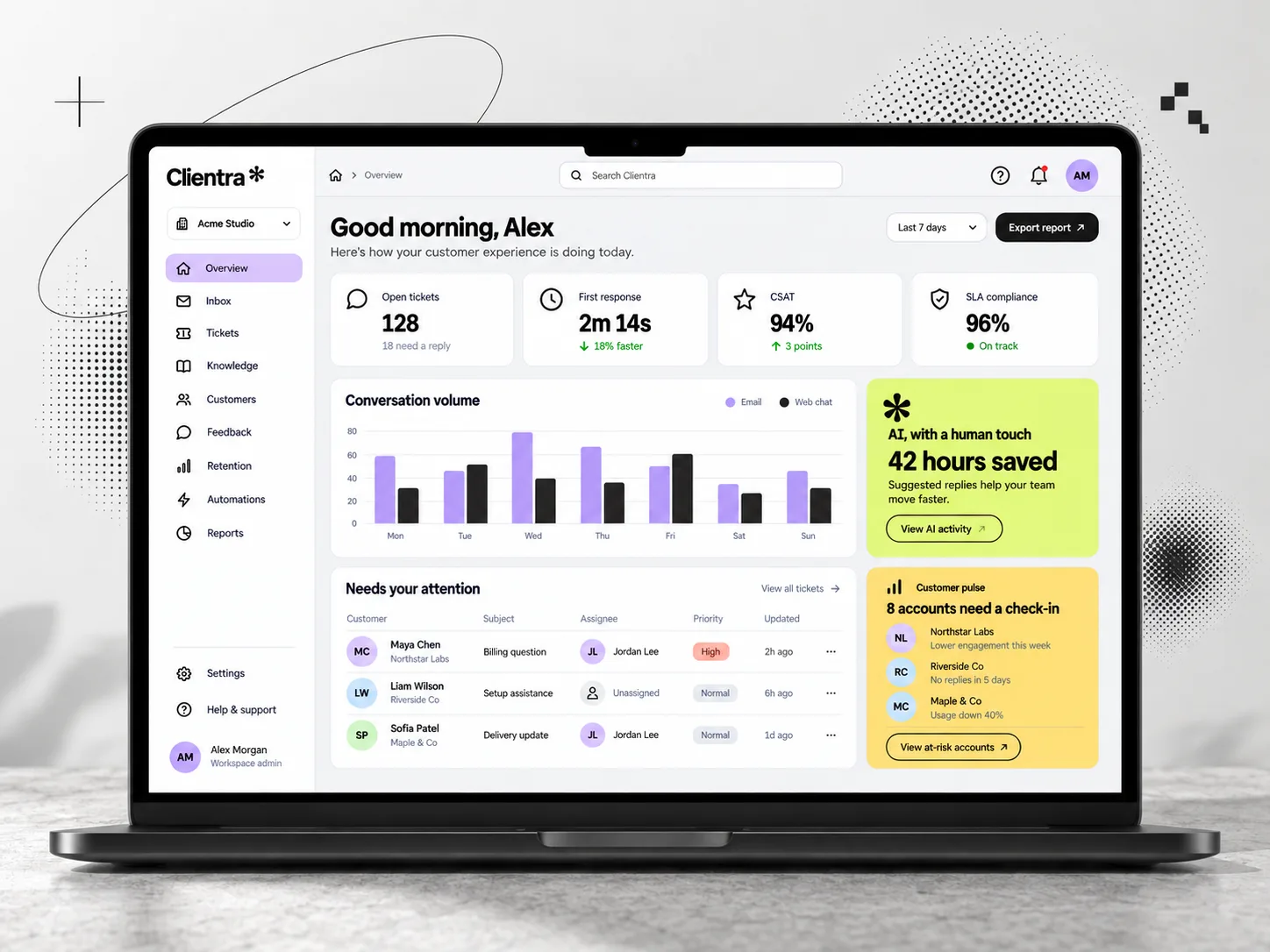
Clientra is an AI-native customer experience platform designed around a simple observation:
The customer experiences one company. The support team often experiences six disconnected systems.
An email may exist in one place.
WhatsApp somewhere else.
A support ticket inside another platform.
Purchase history inside a commerce system.
Previous conversations inside the CRM.
Feedback inside a spreadsheet.
Knowledge inside documentation.
Yet when the customer asks for help, they expect the company to understand the entire relationship.
Clientra is designed to bring that context together.
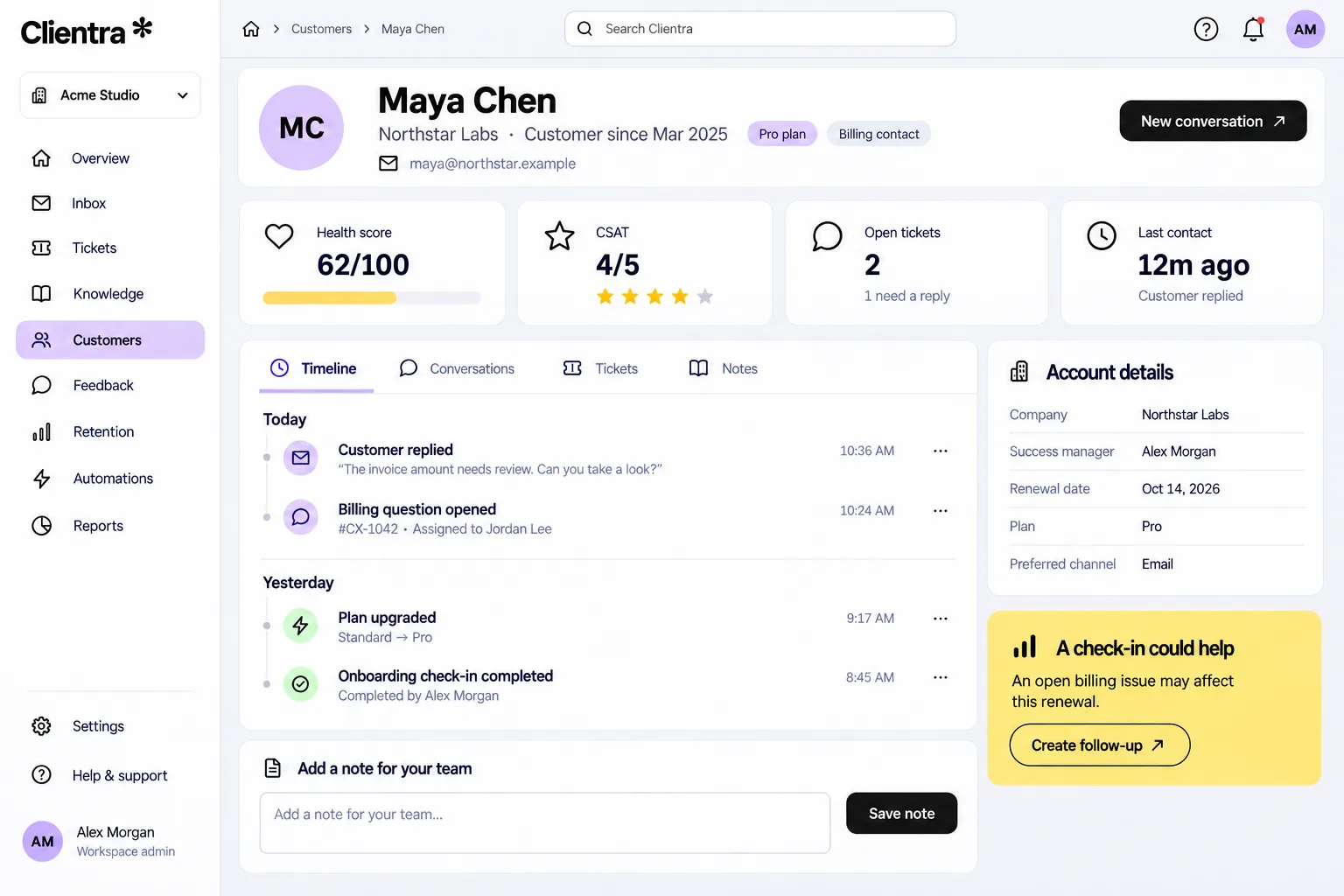
The customer is the unit, not the ticket
The most important product decision was refusing to make the ticket the centre of the system.
The customer relationship is the centre.
Tickets, conversations, feedback, satisfaction scores, purchases, subscriptions, escalations and previous interactions all become part of a customer timeline.
That means the system can understand situations differently.
Instead of:
Ticket #4821: Refund request
Clientra could understand:
Returning customer · 3 previous support interactions · unresolved delivery complaint · negative sentiment increasing · premium account · potential churn risk
The agent should respond differently because the situation is different.
Omnichannel support
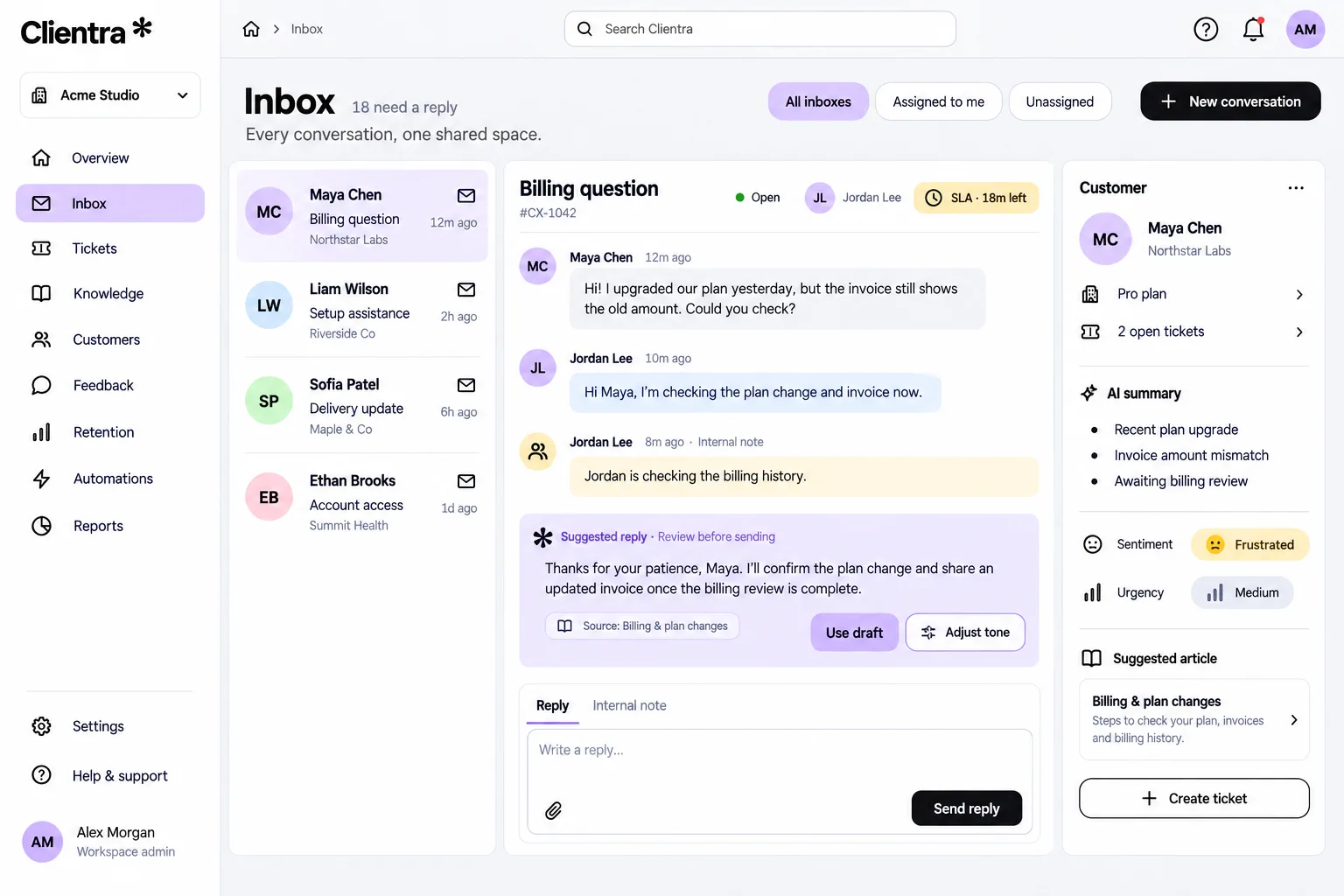
Conversations can be assigned, prioritised, escalated and resolved from one workspace.
A shared customer profile provides the context behind the conversation while internal notes allow collaboration without exposing internal communication to the customer.
- website chat
- SMS
- social messages
- reviews
- support tickets
AI as assistant and operator
But an equally important design question is:
When should AI stop?
Not every customer interaction should be automated.
Sensitive complaints.
High-value customers.
Complex billing disputes.
Emotionally charged conversations.
Uncertain situations.
These should escalate to a person with the context already prepared.
Human-in-the-loop behaviour is therefore part of the product architecture, not an emergency fallback.
- summarise long conversations
- suggest replies
- rewrite tone
- translate responses
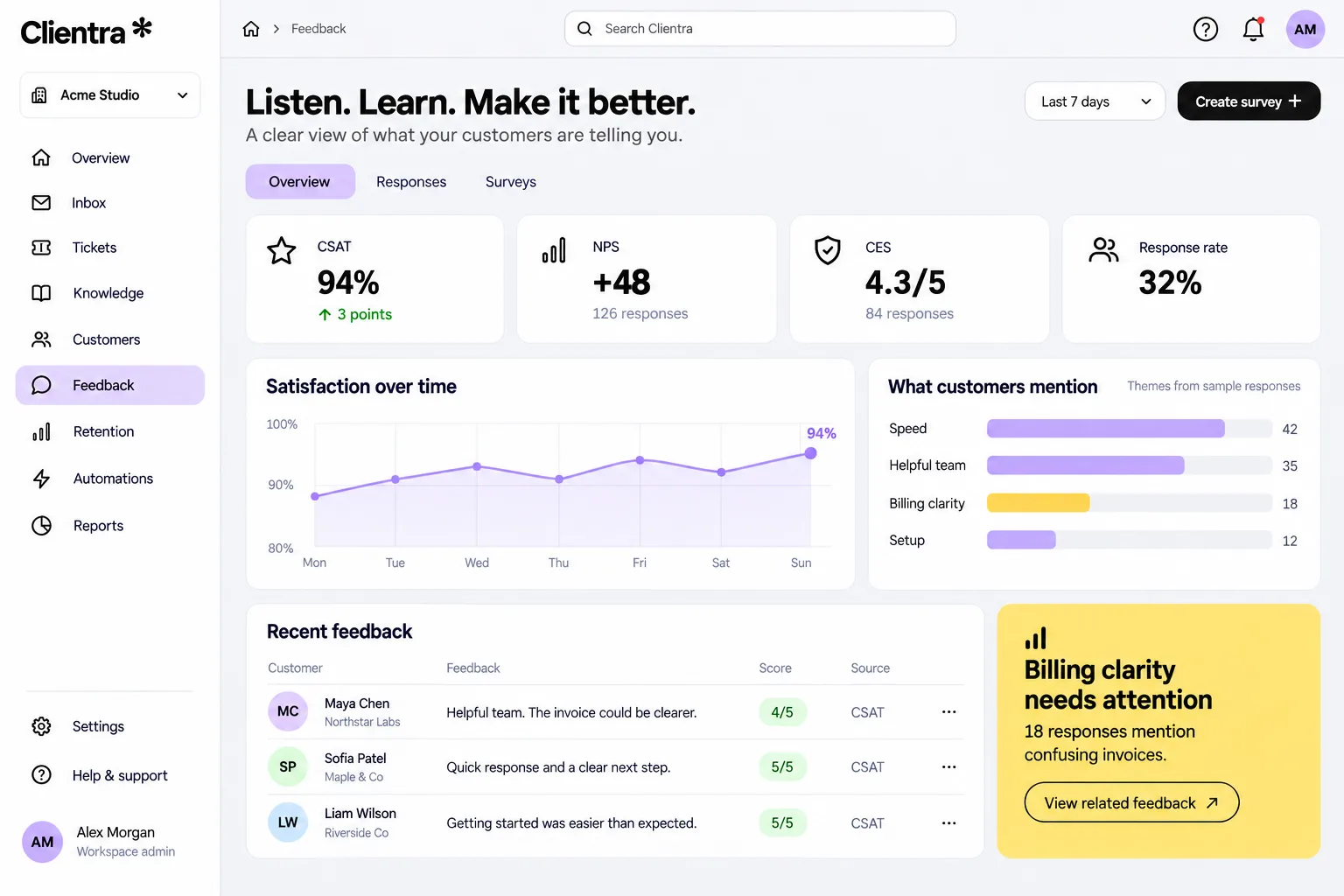
- detect sentiment
- classify intent
- identify complaints
- estimate urgency
- detect repeated issues
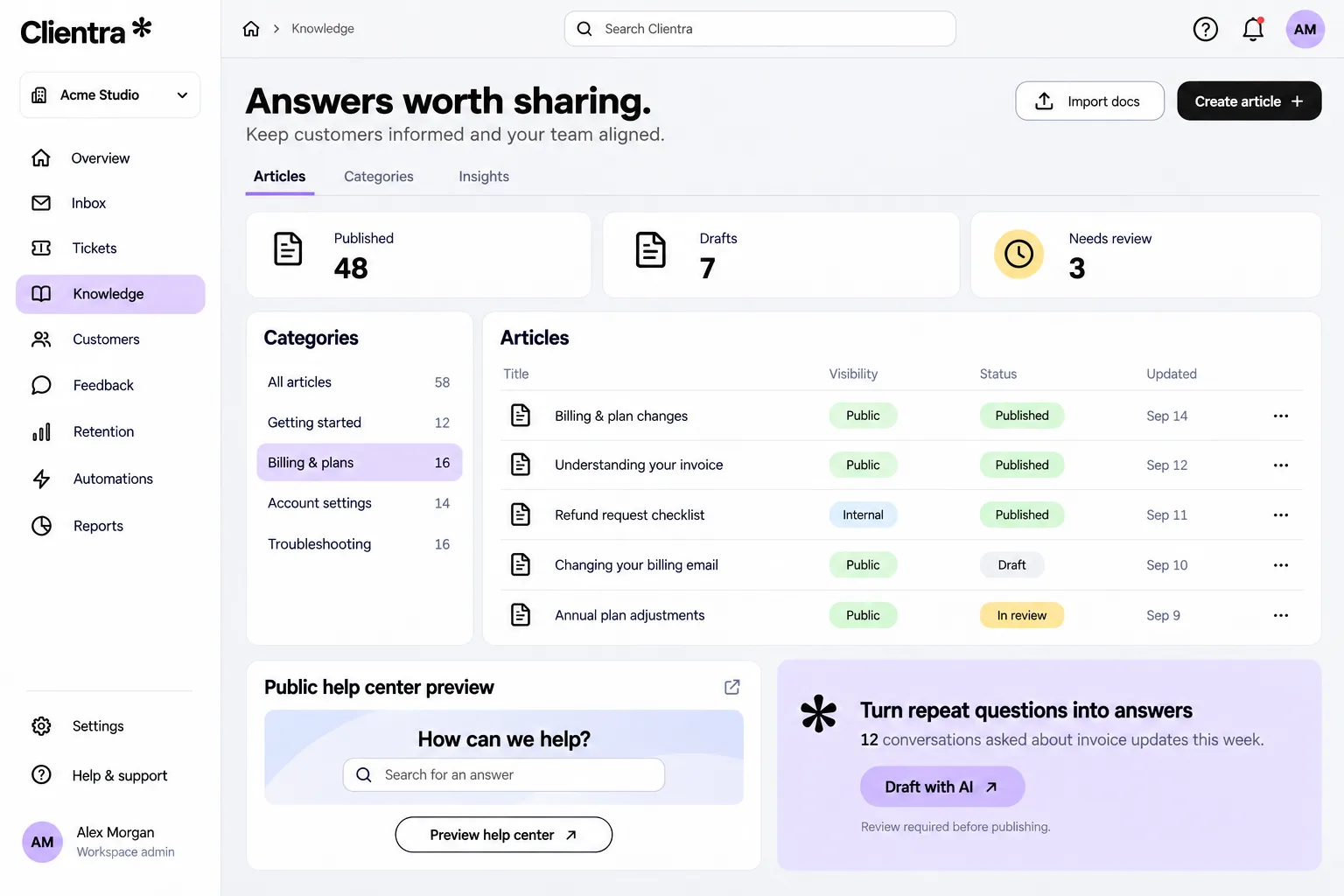
- suggest knowledge articles
- automatically tag tickets
- recommend escalation
- identify missing information
- detect potential churn
- prepare context before human handoff
Knowledge that learns from support
The knowledge base is not designed as a static collection of articles.
It participates in the support loop.
Repeated questions can reveal documentation gaps.
Frequently escalated issues can suggest missing help content.
Poorly performing articles can be surfaced.
Agents can turn successful resolutions into reusable knowledge.
AI can recommend documentation when drafting replies.
Over time:
The system improves through use.
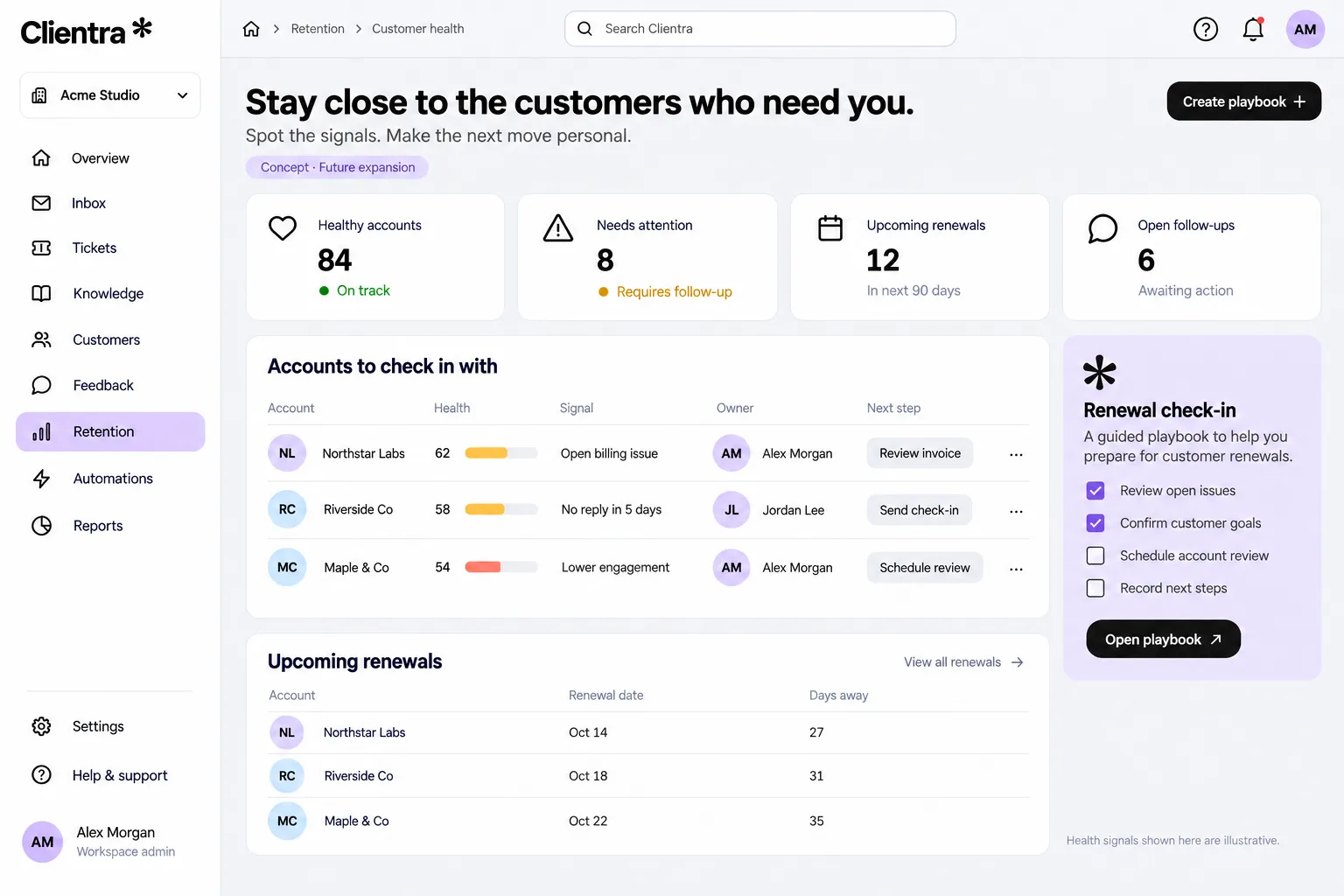
Customer success and retention
Clientra also extends beyond traditional support.
Once customer context exists, the platform can support:
That creates a bridge between reactive support and proactive customer success.
- customer health scores
- satisfaction history
- renewal reminders
- churn signals
- onboarding workflows
- success playbooks
- low-engagement alerts
- account review tasks
- upsell opportunities
- repeated complaint detection
Architecture direction
The platform is designed around:
Conversation Events · Ticket State Machines · Customer Profiles · Channel Adapters · Webhooks · Queues · SLA Timers · AI Classification · Knowledge Retrieval · Workflow Automation · RBAC · Audit Logs
Communication providers sit behind a shared channel abstraction.
Email, WhatsApp, SMS, chat and future channels may use completely different APIs, but the customer experience layer should not need to care.
What this project represents
Clientra represents one of my broader product principles:
Software should organise complexity around the way humans experience the problem.
Customers do not think in channels.
They think:
“I spoke to your company.”
Good support software should understand the relationship the same way.
Tech stack
- Conversation Events
- Ticket State Machines
- Customer Profiles
- Channel Adapters
- Webhooks
- Queues
- SLA Timers
- AI Classification
- Knowledge Retrieval
- Workflow Automation
- RBAC
- Audit Logs
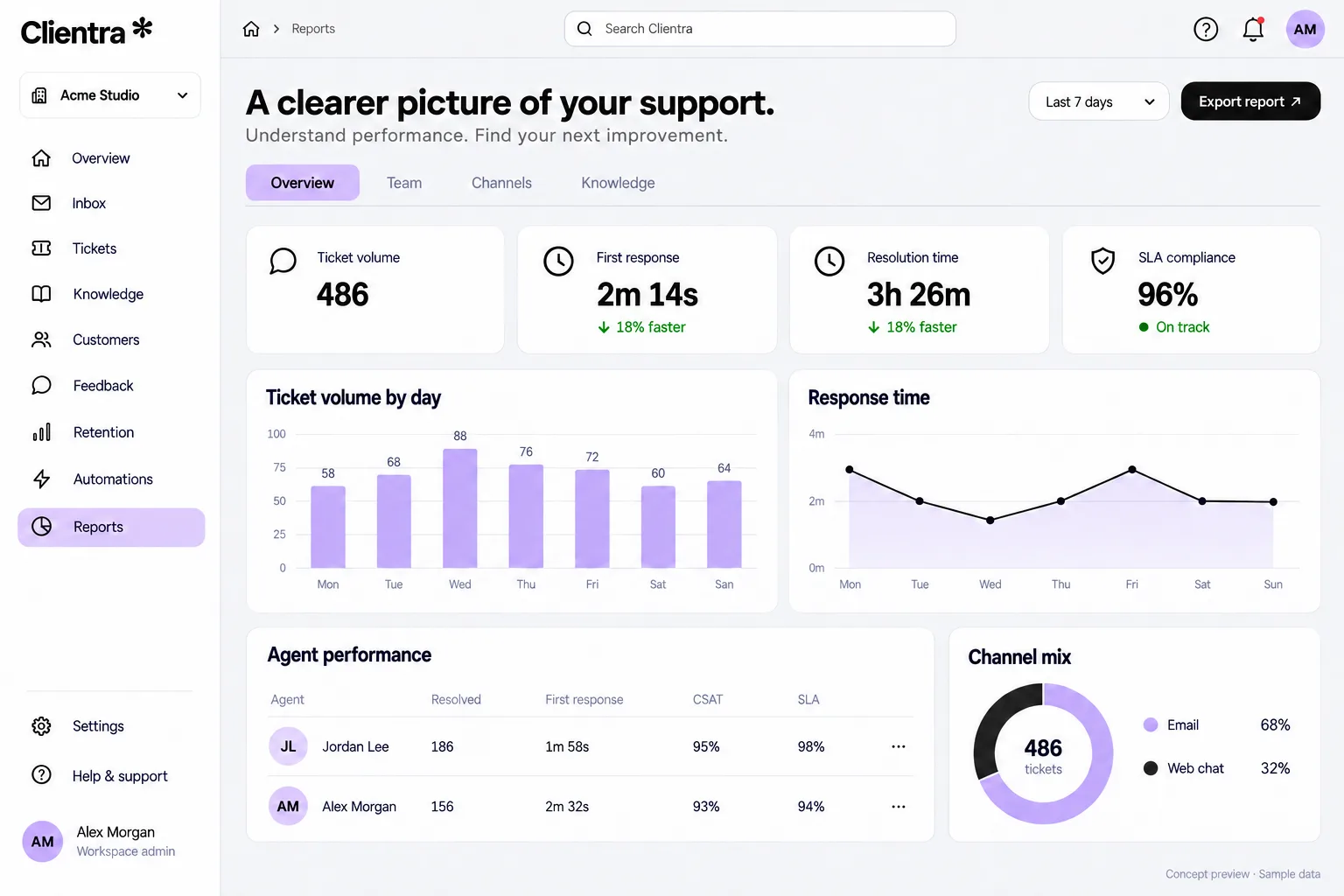
Inside the Product
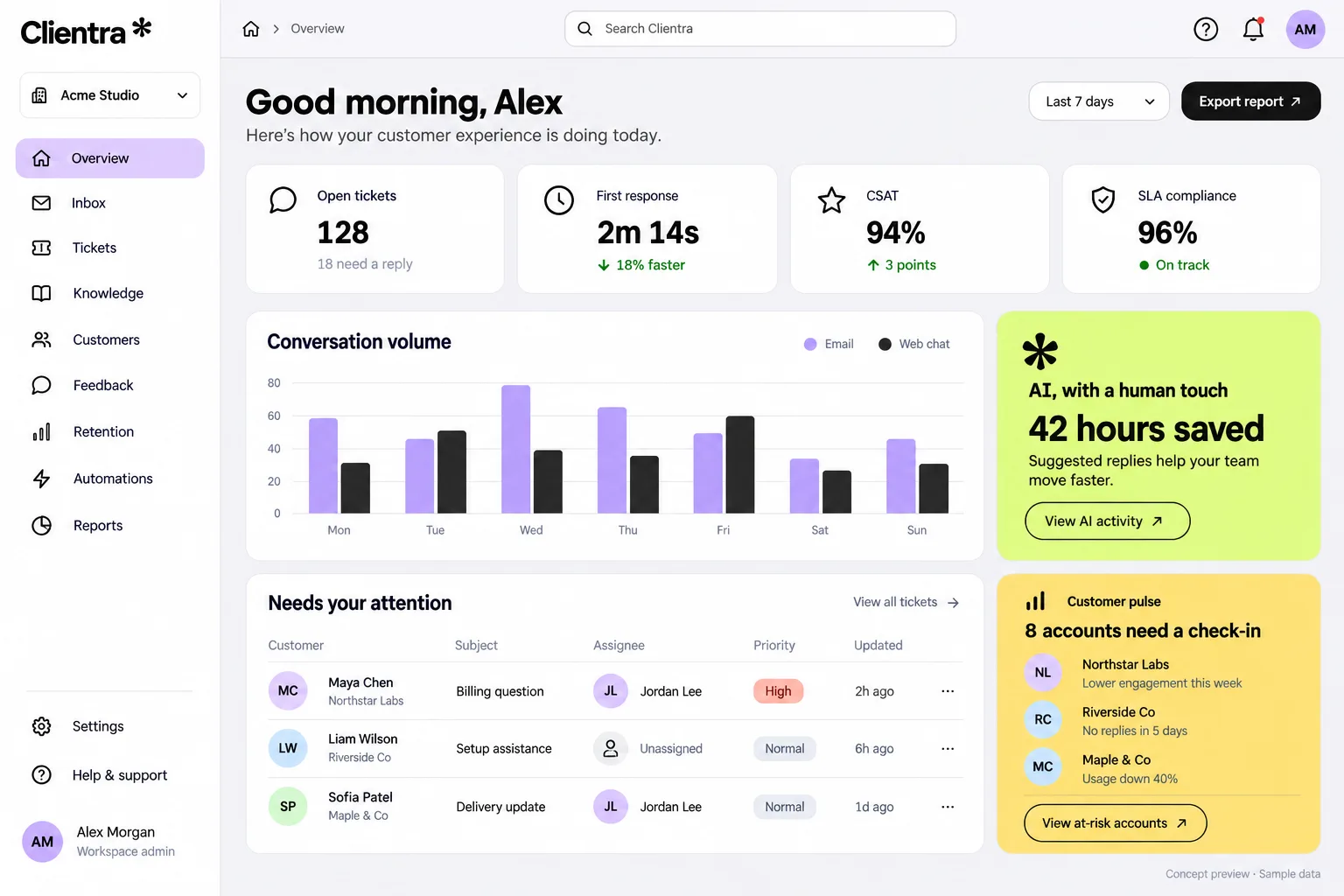
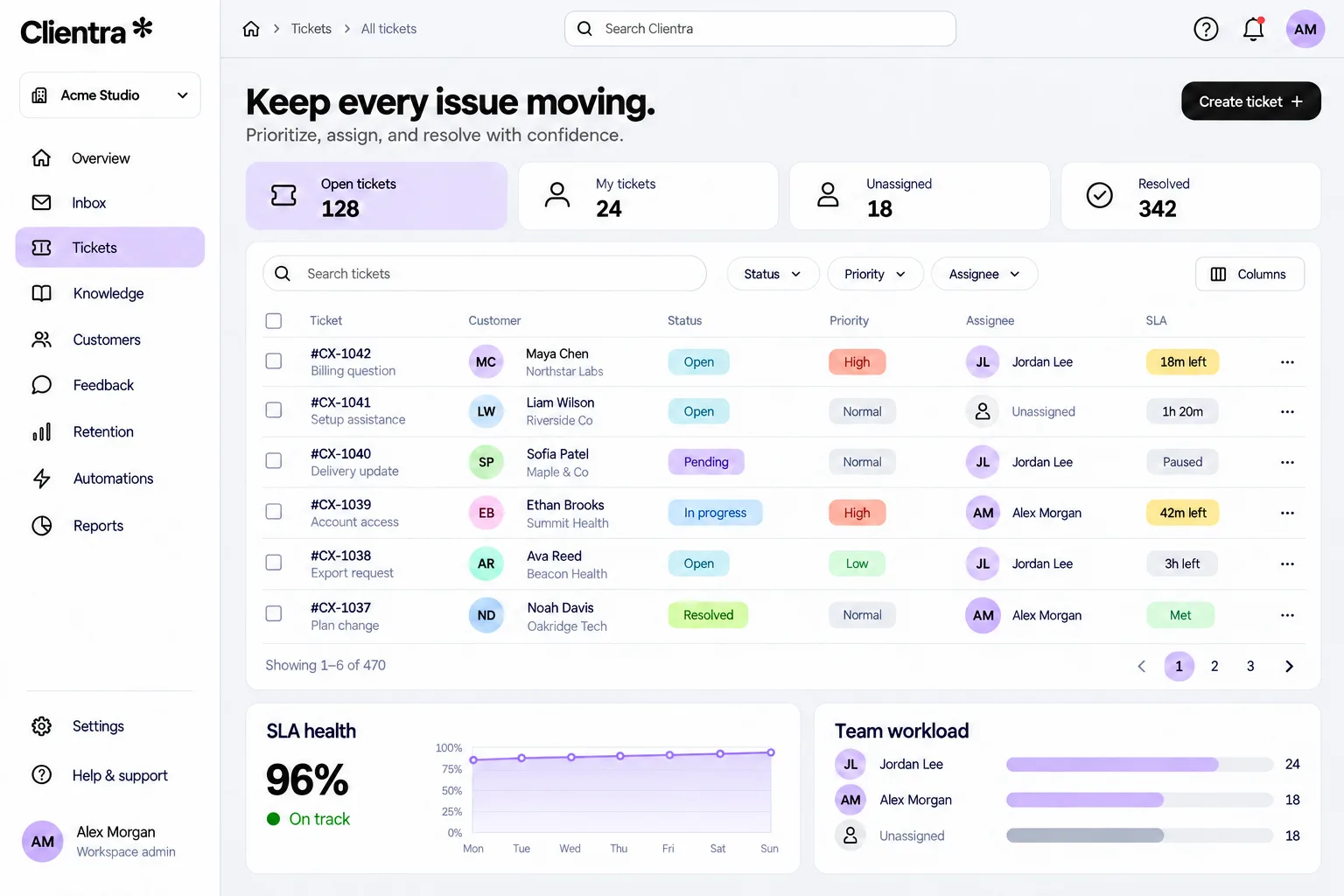
Scroll sideways — or use the arrows — to walk through the product.
Product map
See how the seven systems connect.
Create → Market → Sell → Serve → Deliver → Understand — one thesis across seven products, plus the process behind all of them.