Case study / Selected work
Deliveer
Clients should never have to ask, “Any update?”
A polished project delivery portal that brings onboarding, milestones, files, approvals, requests and client communication into one shared source of truth.
- Role
- Product Strategy · UX Architecture · Workflow Design
- Timeframe
- 2026
- Status
- Active Build
- Deliverables
- Concept, portal and studio UX, MVP scope and data model notes
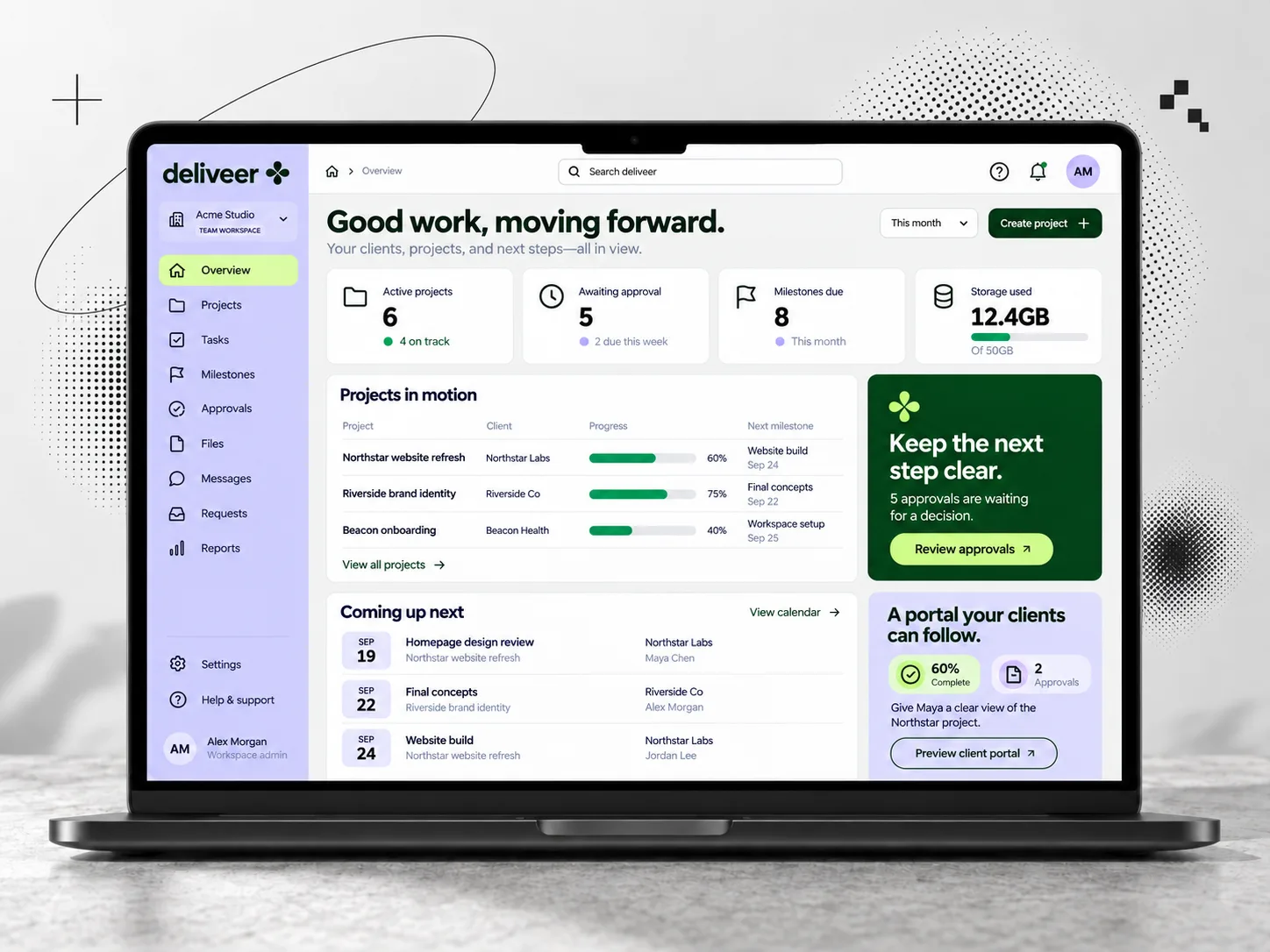
Deliveer is a client and project delivery platform designed for agencies, consultants, studios and service businesses that want to give clients a far better experience than email threads, scattered files and status meetings.
A surprising amount of professional service work is still managed through:
Email + WhatsApp + Google Drive + Spreadsheets + Memory
The work might be excellent.
The delivery experience often is not.
Deliveer is designed to make the way work is delivered feel as professional as the work itself.
Not another project manager
The project started from an important distinction.
Traditional project management software is built for the team doing the work.
The internal team thinks about:
- tasks
- dependencies
- priorities
- assignees
- blockers
- workload
- deadlines
The client side
The client thinks about completely different questions.
What is happening?
Are we on schedule?
Do you need anything from me?
What requires my approval?
What has been completed?
What happens next?
Deliveer supports both perspectives from the same source of truth.
The internal team gets operational depth.
The client gets clarity.
Client portal
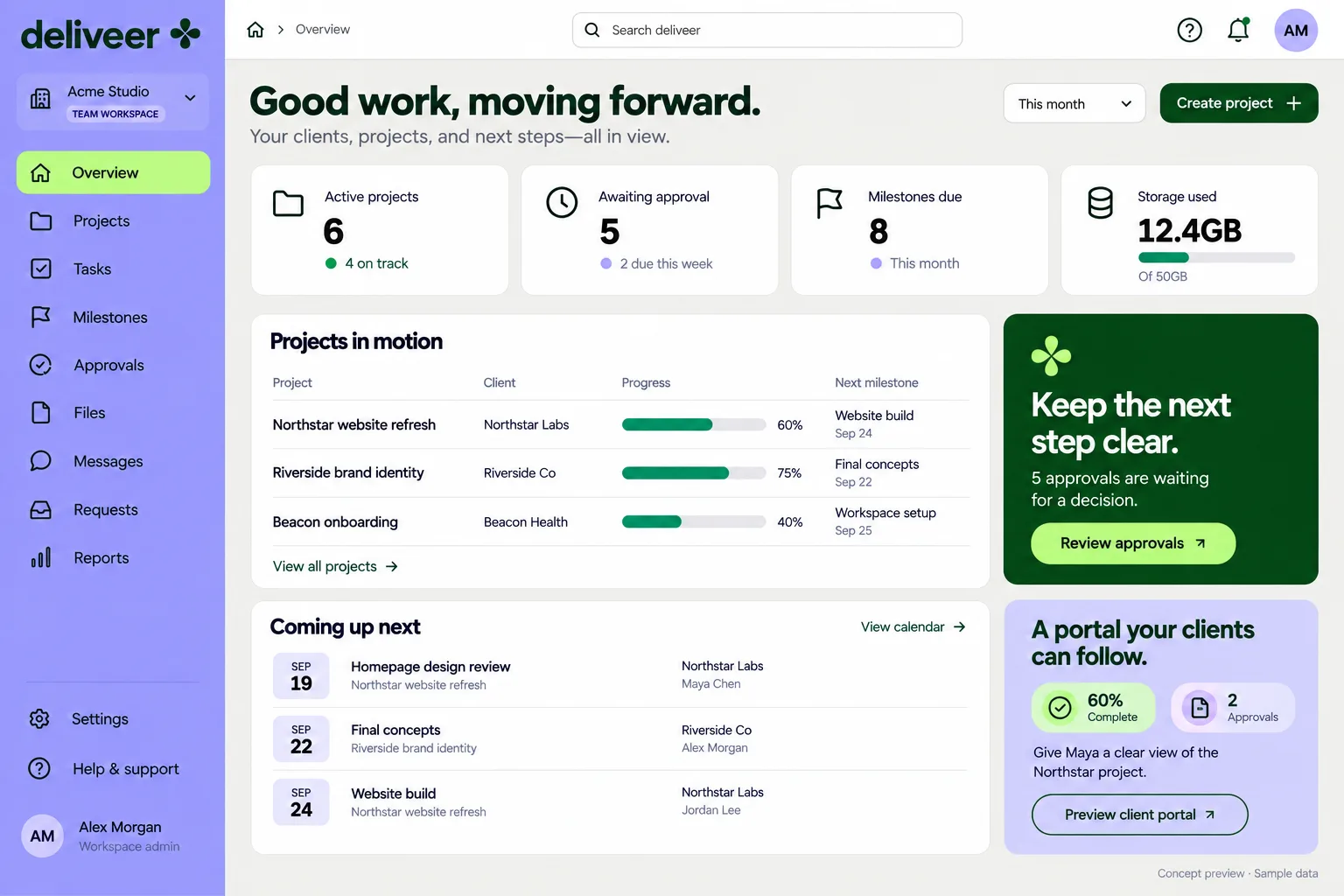
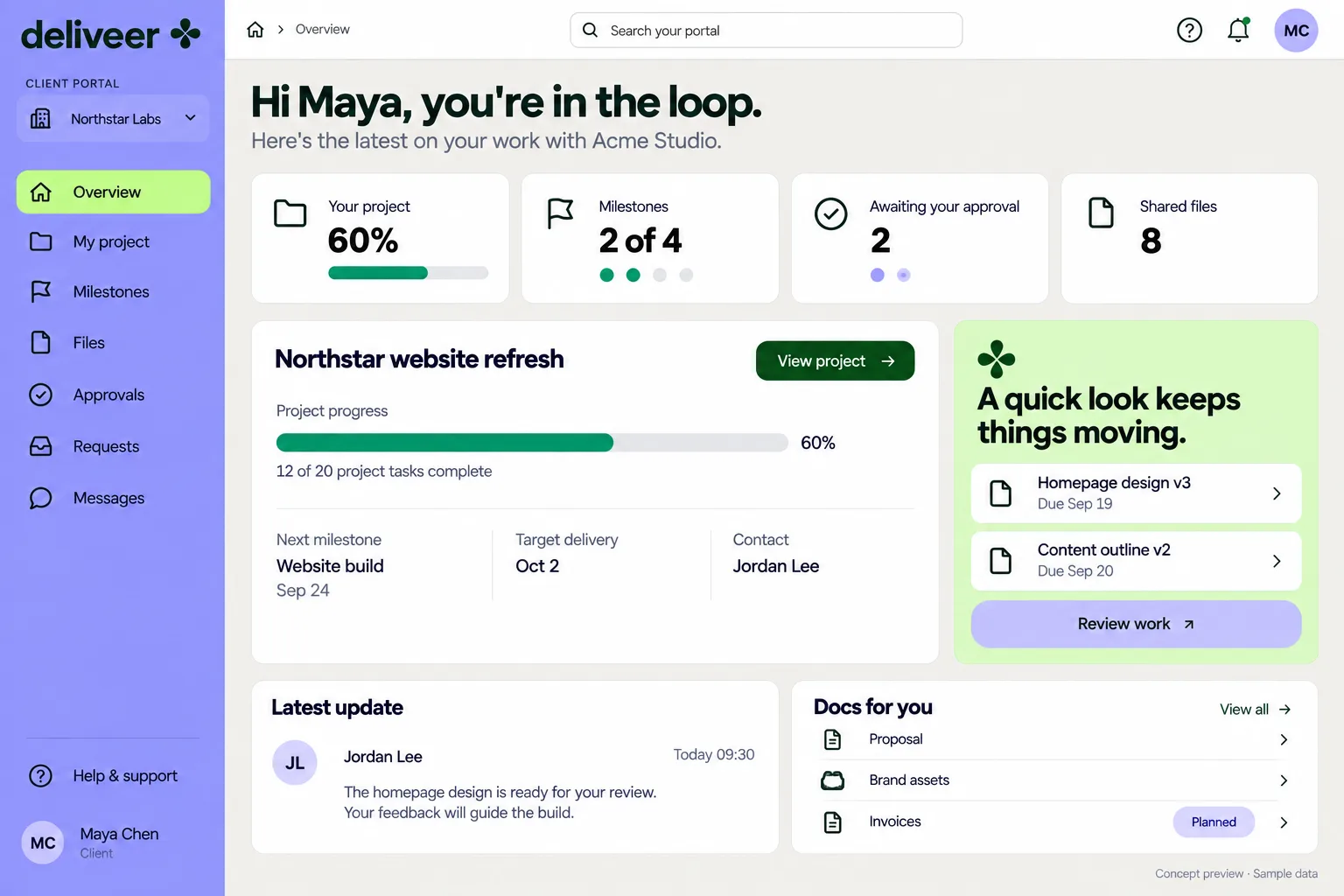
Each client receives a polished branded portal containing the information that actually matters to them.
Instead of emailing:
“Just checking for an update…”
the portal should already answer the question.
- project overview
- current status
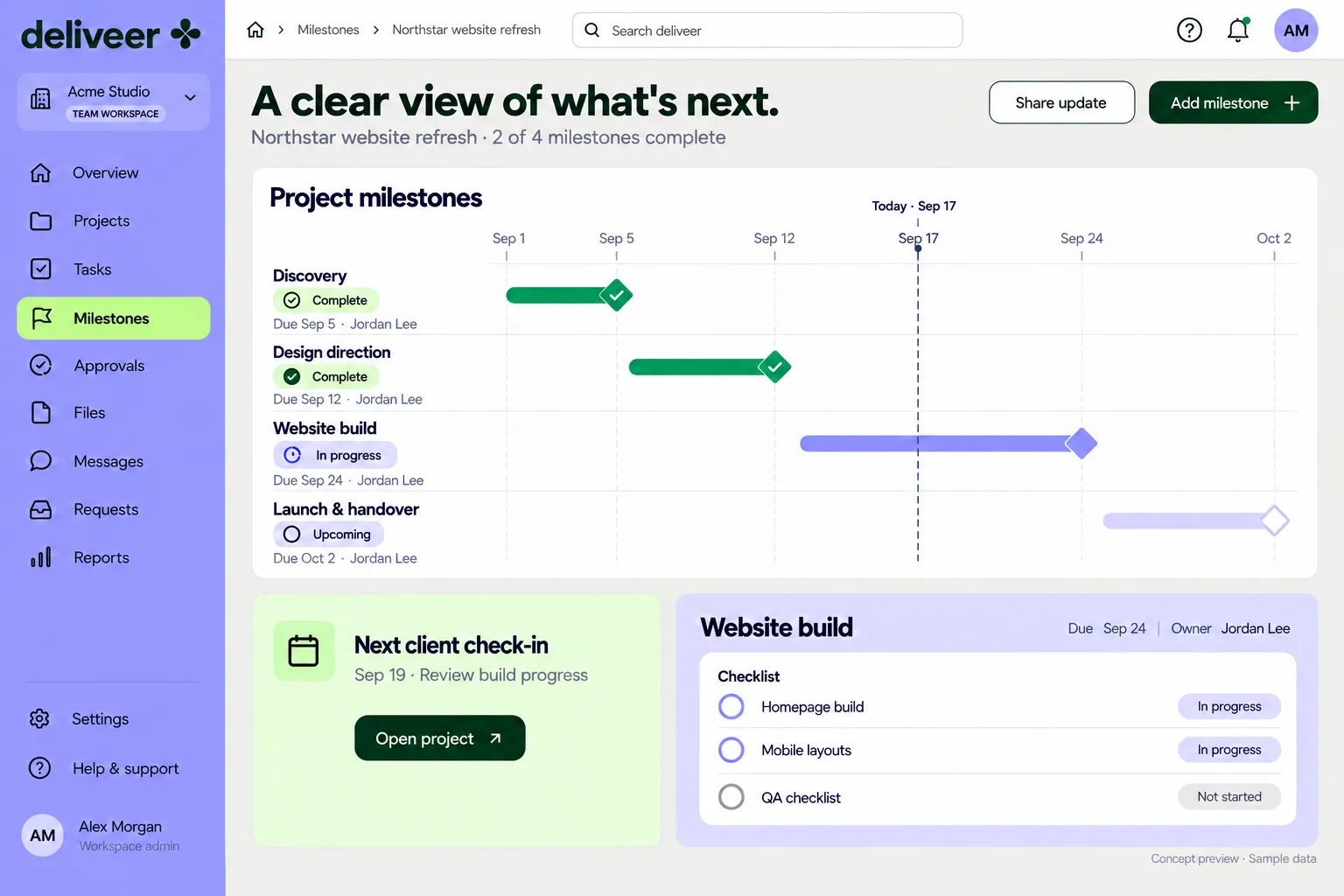
- milestones
- deliverables
- upcoming actions
- files
- approvals
- requests
- messages
- project history
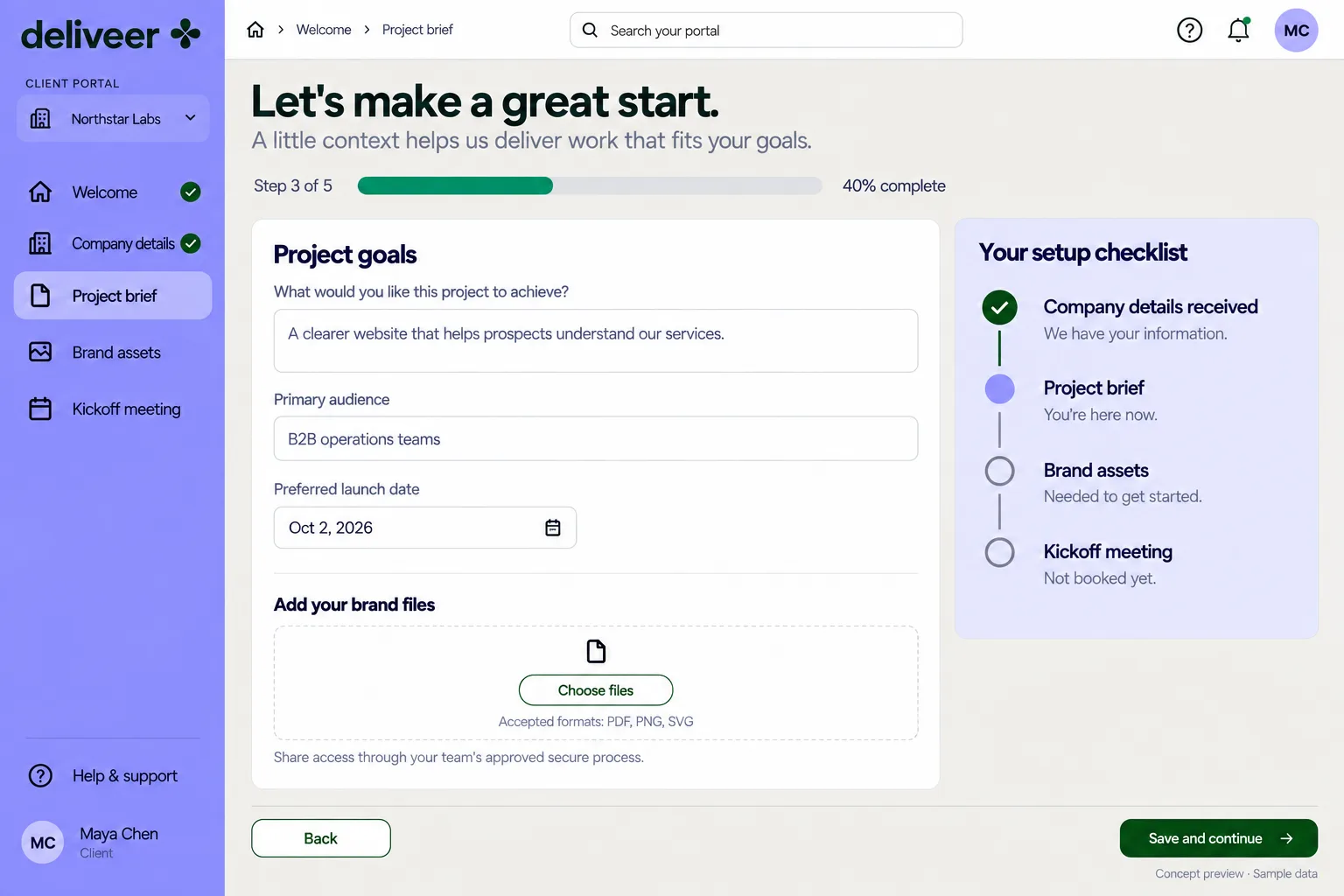
Client onboarding
The experience starts before the project itself.
Once onboarding is complete, the system can automatically initialise the project structure.
A new client should feel like they have entered an organised process from the first interaction.
- company information
- brand assets
- requirements
- project questionnaires
- documents
- access information
- stakeholders
- kickoff availability
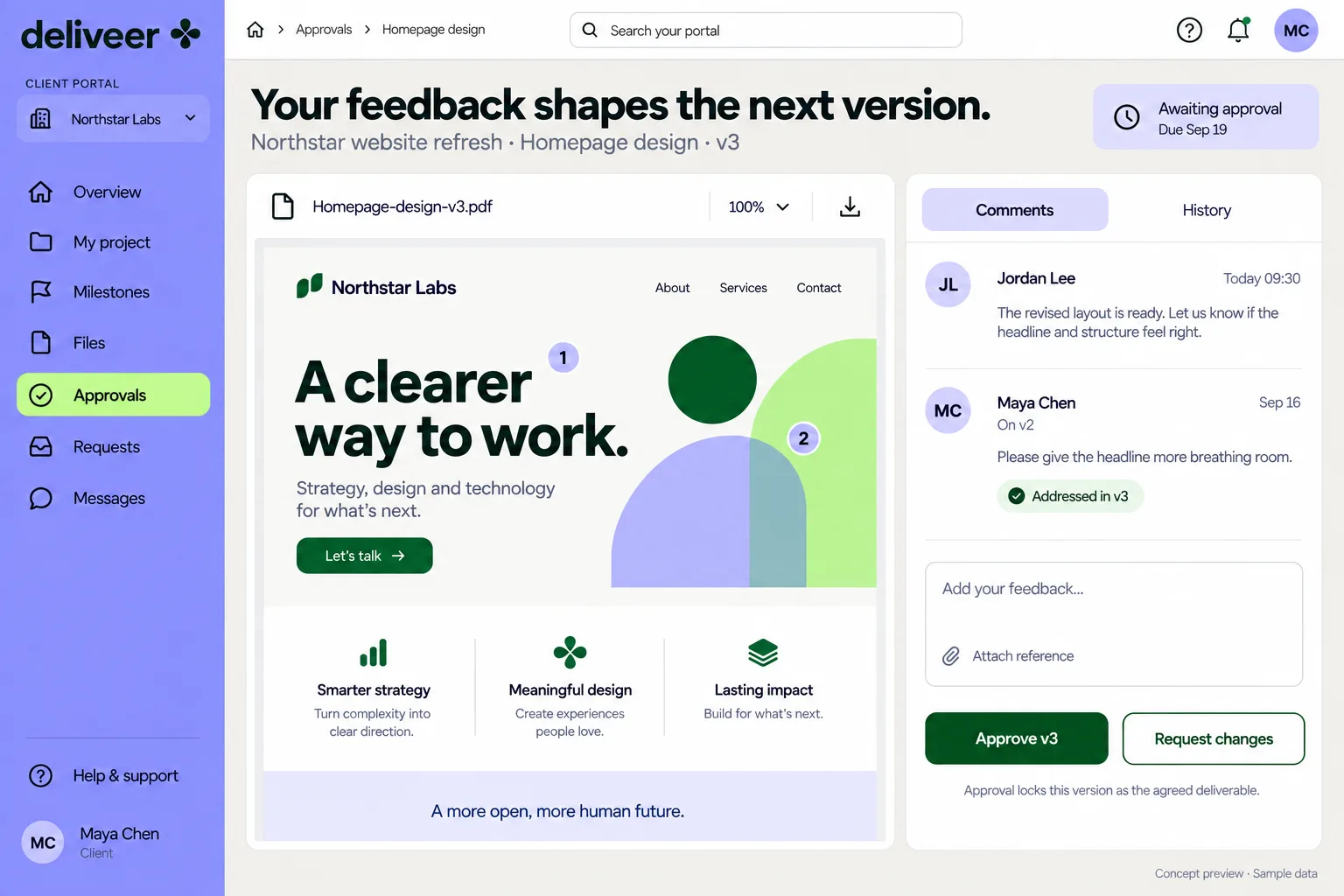
Approvals as a system
Approvals are treated as first-class objects.
Not buried inside a comment thread.
Not hidden in an email.
An approval can contain:
When a version is approved, that exact version can be locked.
This solves one of the most common delivery problems:
“That isn't the version I approved.”
The history can show exactly what was submitted, what changed and when final approval occurred.
Requests and scope
Client requests are also structured.
Those requests can be reviewed and converted into tasks or project changes.
The goal is to reduce the amount of operational work happening invisibly in email and chat.
- support requests
- change requests
- revision requests
- new work
- bugs
- questions
Workflow automation
Because projects, milestones and approvals exist as structured objects, useful automation becomes possible.
For example:
Or:
The platform becomes a workflow engine behind a very simple client experience.
Architecture direction
The core model follows relationships such as:
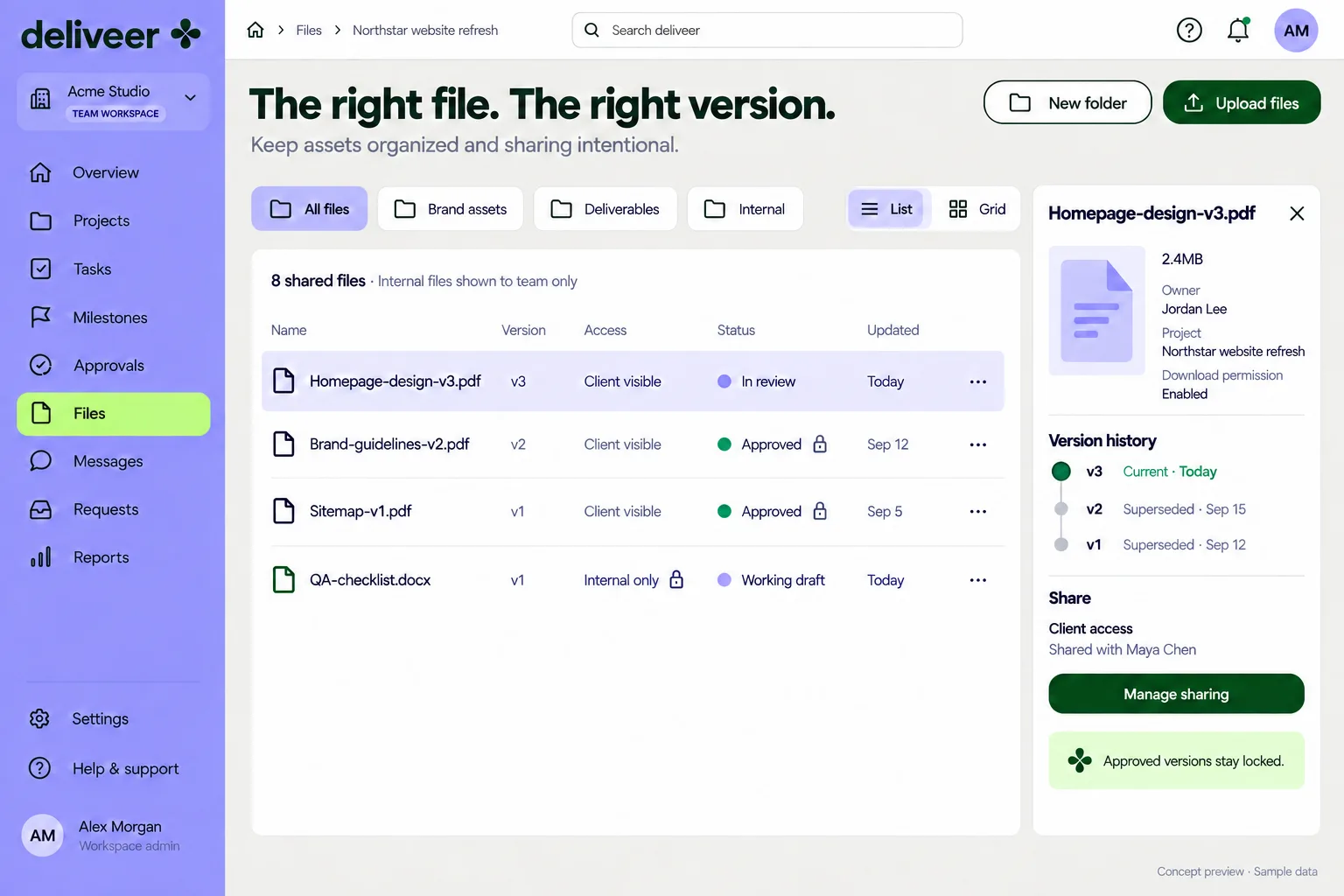
Permissions determine what internal teams, clients and guests can see without creating completely separate data structures.
UX philosophy
The strongest design principle behind Deliveer is selective transparency.
Clients deserve visibility.
They do not need operational noise.
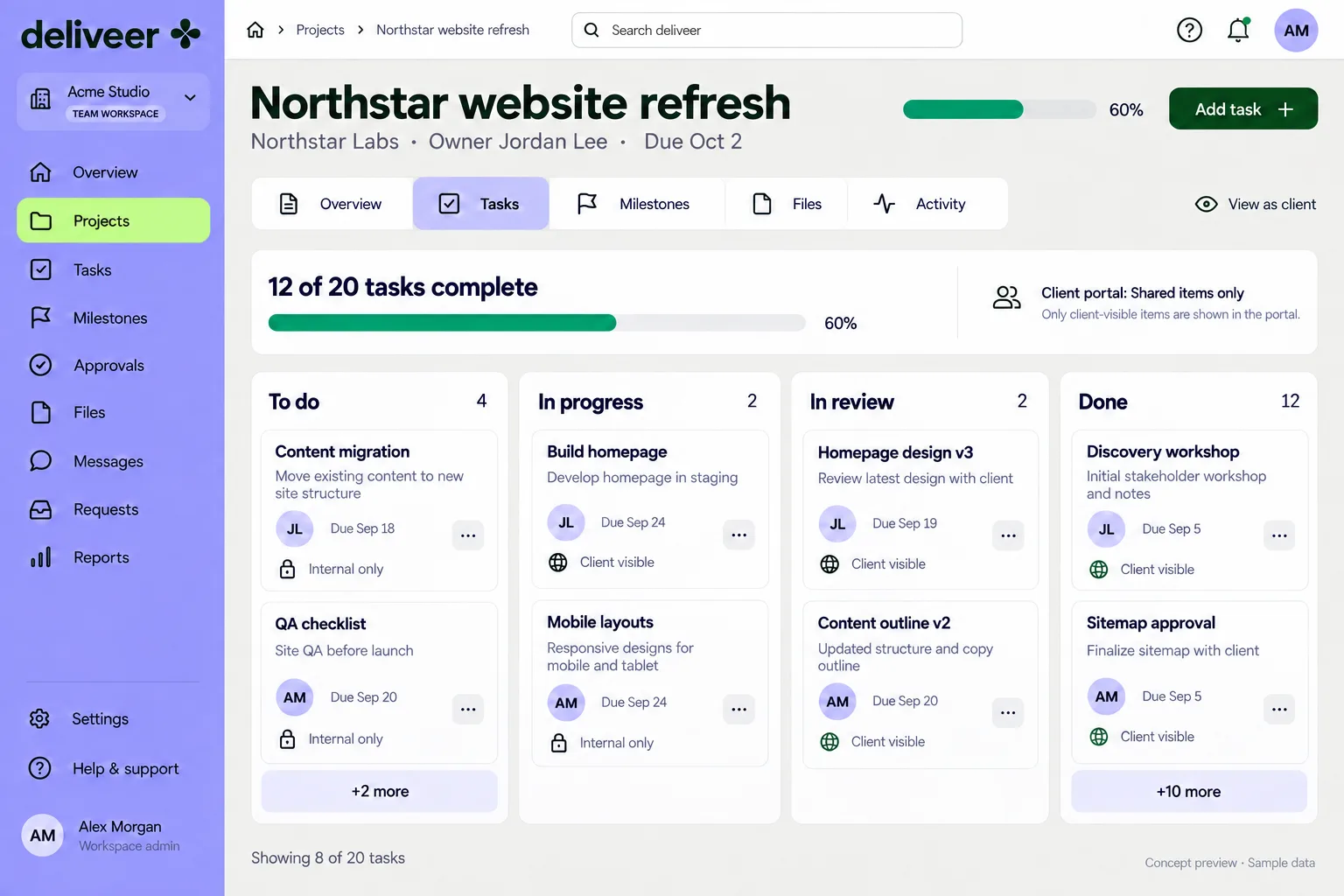
They should see progress without seeing every internal task.
They should see deadlines without seeing every team discussion.
They should see deliverables without navigating the agency's internal workspace.
That is progressive disclosure applied to project relationships.
What this project represents
Deliveer reflects my interest in designing software around trust.
Clients rarely become frustrated because they cannot see an internal Kanban board.
They become frustrated because they do not know what is happening.
The product is therefore built around one outcome:
Make professional service delivery feel professional.
Tech stack
 TypeScript
- REST APIs
 PostgreSQL
- Object Storage
- Versioned Deliverables
- Approval State Machines
- Role-based Permissions
- Notifications
- Audit History
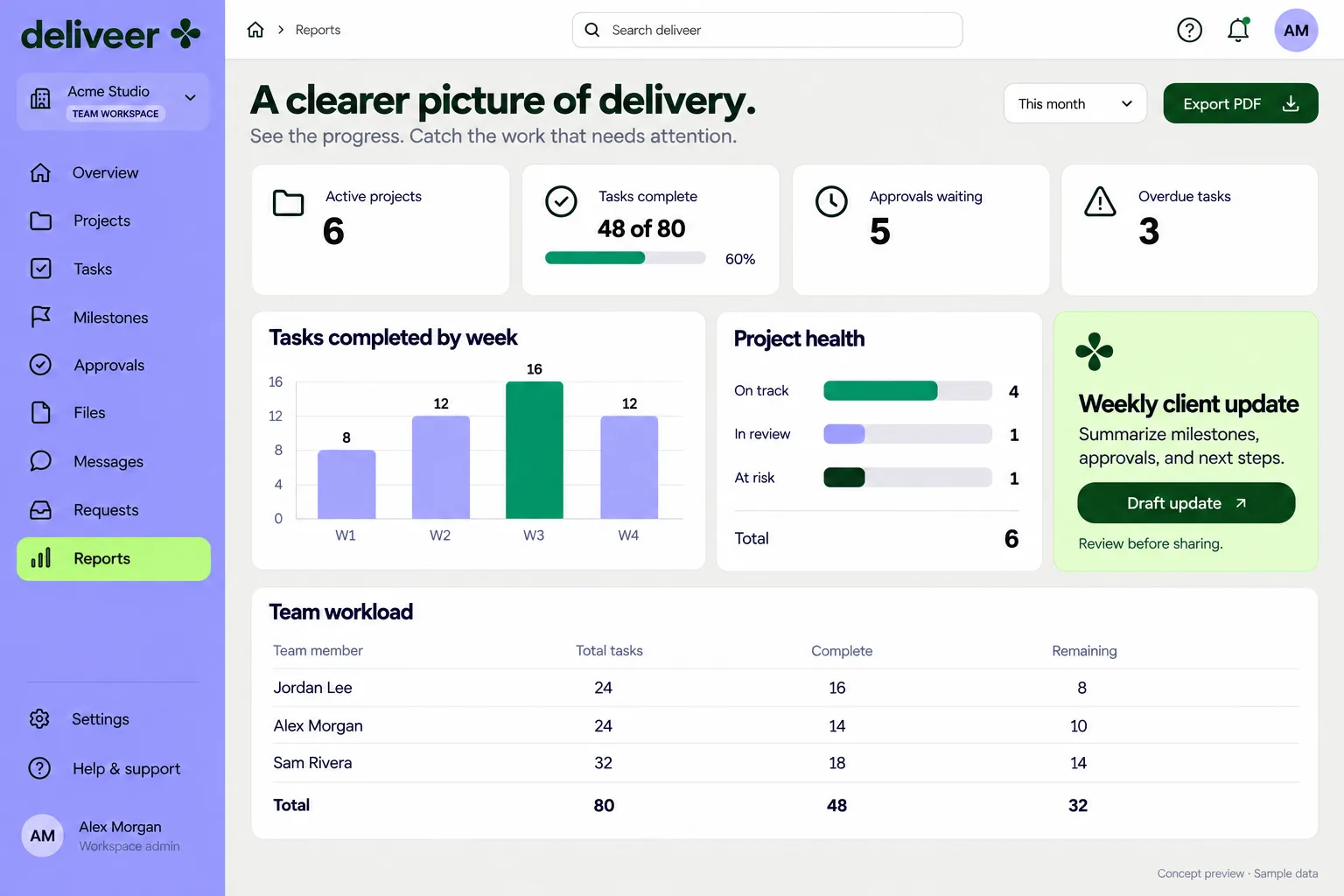
Inside the Product
Scroll sideways — or use the arrows — to walk through the product.
Product map
See how the seven systems connect.
Create → Market → Sell → Serve → Deliver → Understand — one thesis across seven products, plus the process behind all of them.