Case study / Selected work
SalesMaster
A CRM that remembers everything — and tells you what to do next.
An AI-native sales platform that understands every lead, conversation and deal to surface risks, automate follow-ups and move revenue forward.
- Role
- Product Strategy · CRM Architecture · AI Workflow Design · UX Systems
- Timeframe
- 2026
- Status
- Active Build
- Deliverables
- Concept, pipeline UX, AI scoring and copilot flows
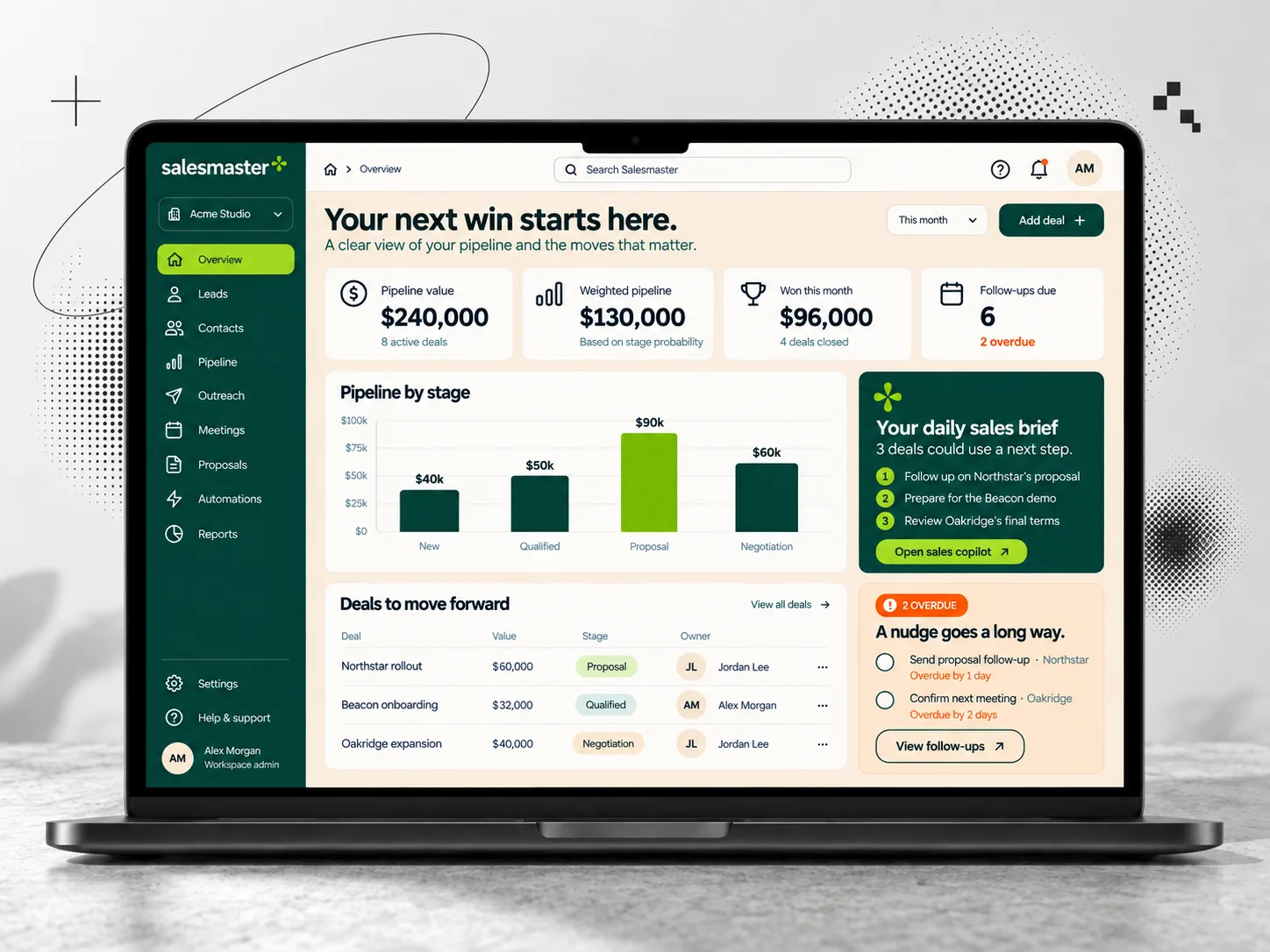
SalesMaster is an AI-native CRM designed around a problem I see in traditional sales software:
CRMs are incredibly good at remembering information and surprisingly bad at helping people decide what to do with it.
Sales teams collect enormous amounts of context.
Emails.
Meetings.
Notes.
Tasks.
Objections.
Pipeline changes.
Proposal activity.
Buying signals.
Stakeholders.
Yet the salesperson is still expected to mentally connect all of those dots.
SalesMaster is designed to change that relationship.
From system of record to system of action
Traditional CRM architecture revolves around recording activity.
SalesMaster keeps that foundation but adds another layer:
interpretation.
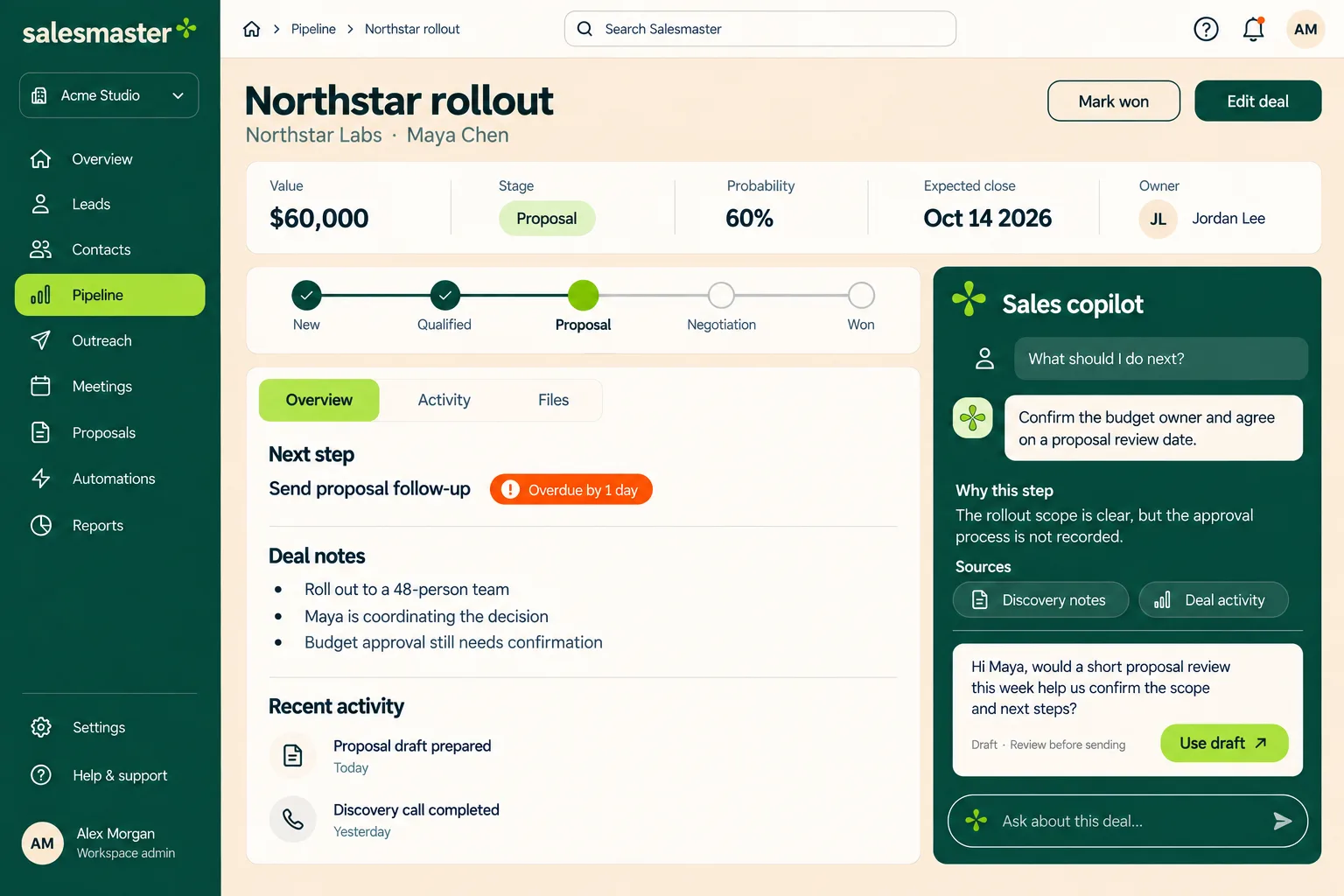
Every opportunity should be able to answer three questions immediately:
Where are we?
Why are we here?
What should happen next?
That became the central product philosophy.
Instead of forcing a salesperson to inspect twenty activities before a call, the system should be capable of presenting the situation clearly.
For example:
Deal Health — At Risk
No meaningful activity for eleven days.
The proposal has been viewed twice.
Pricing concerns remain unresolved.
The economic buyer has not attended the last two meetings.
Recommended next move: Re-engage the economic buyer and address pricing before scheduling another product discussion.
That is the difference between storing information and using it.
CRM foundation
SalesMaster is designed around the core commercial objects businesses already understand.
But those objects are deeply connected.
The relationship model matters as much as the individual records.
A lead may become a contact.
A contact belongs to a company.
A company may contain several decision-makers.
A deal contains activities.
Activities reveal momentum.
Momentum affects risk.
Risk informs the next action.
That relationship graph gives the AI meaningful commercial context.
- leads
- contacts
- companies
- accounts
- opportunities
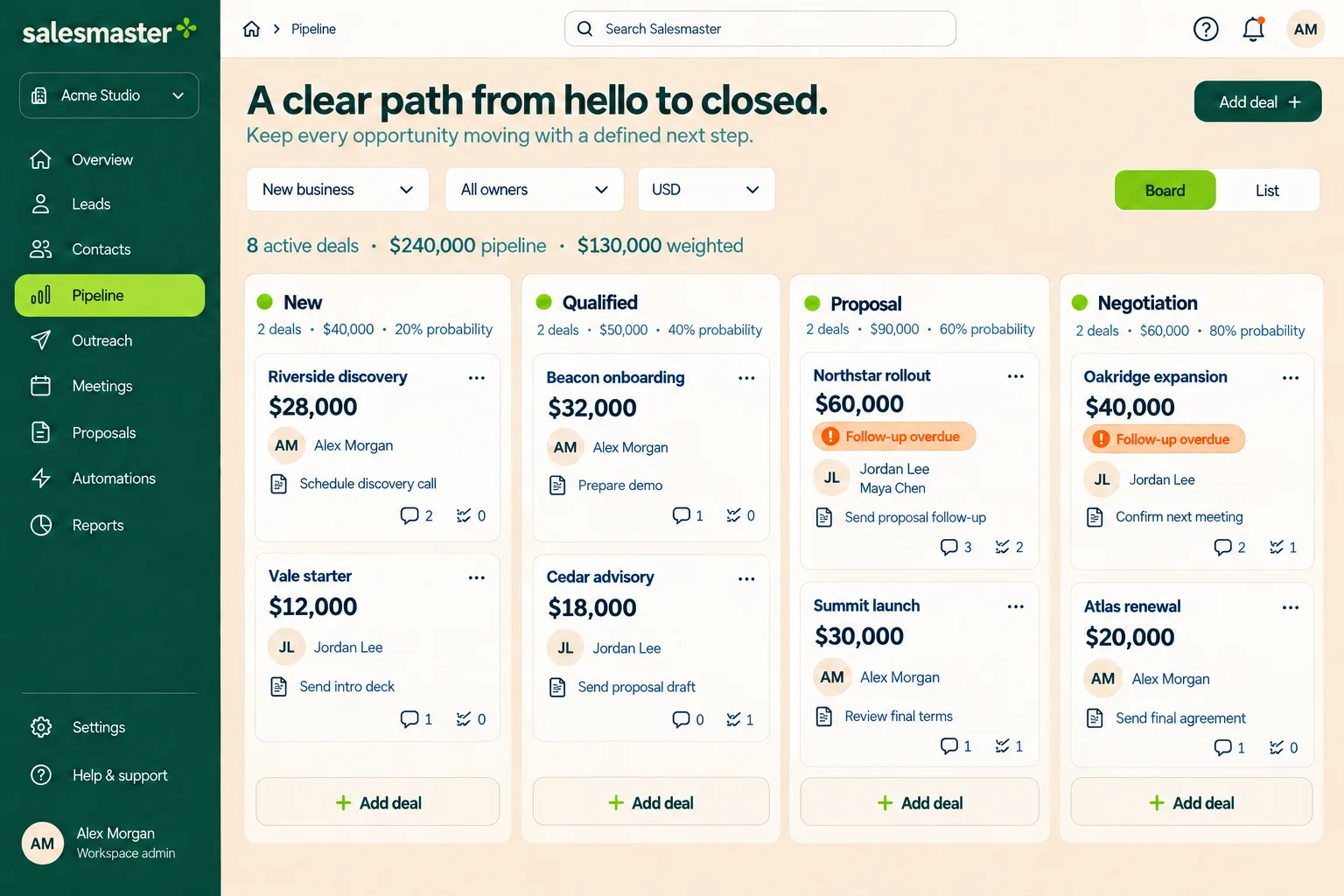
- pipelines
- stages
- tasks
- activities
- meetings
- communications
- proposals
- quotes
- sequences
- forecasts
AI where decisions happen
I deliberately avoided designing SalesMaster around a generic floating chatbot.
AI should appear where decisions already happen.
Inside a deal.
Inside a contact.
Inside the pipeline.
Before a meeting.
After a call.
During follow-up.
The salesperson should not need to repeatedly explain the deal to the AI.
The CRM already contains the context.
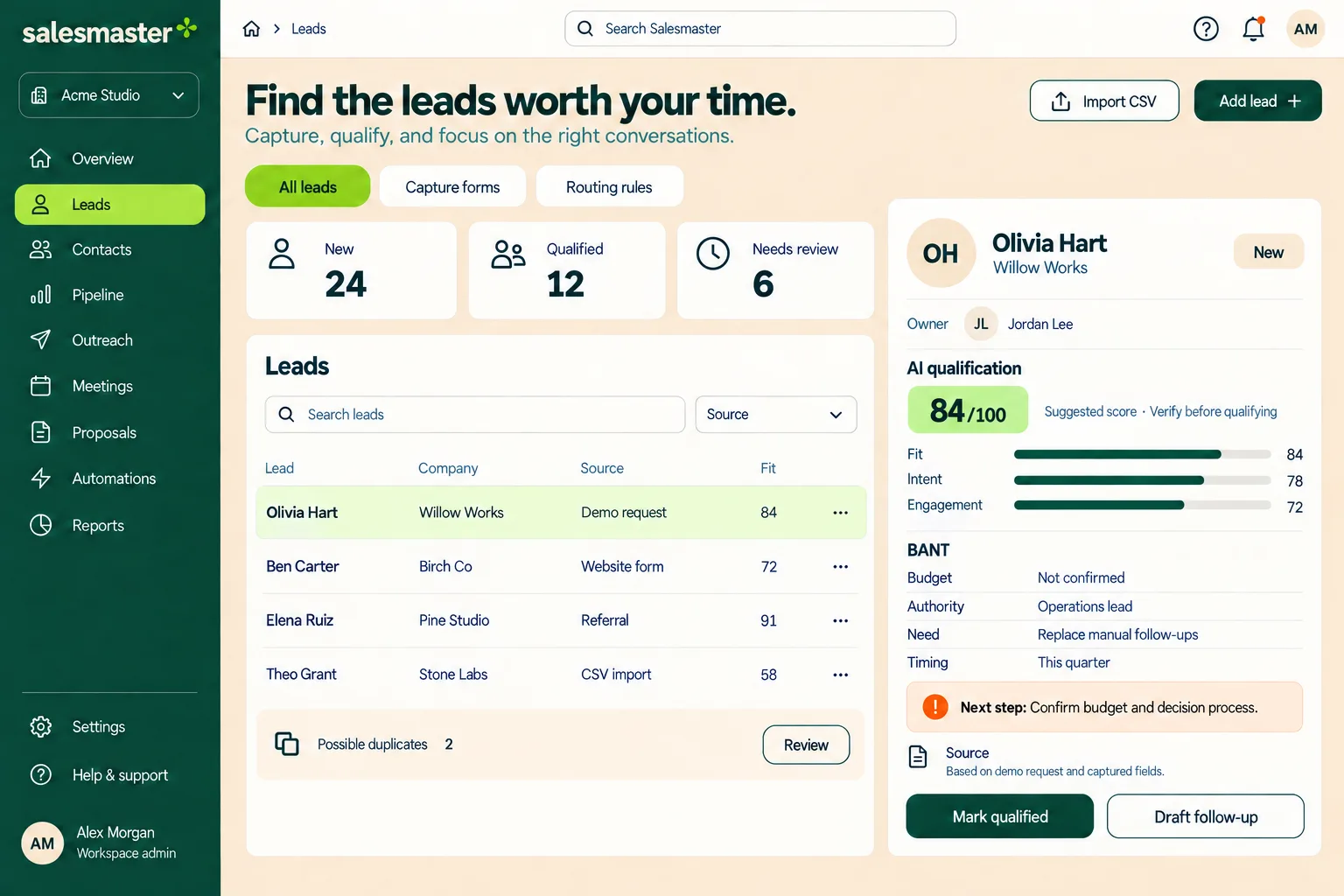
- lead qualification
- fit scoring
- intent analysis
- buying readiness
- pain-point extraction
- objection detection
- stakeholder detection
- activity summaries
- meeting preparation
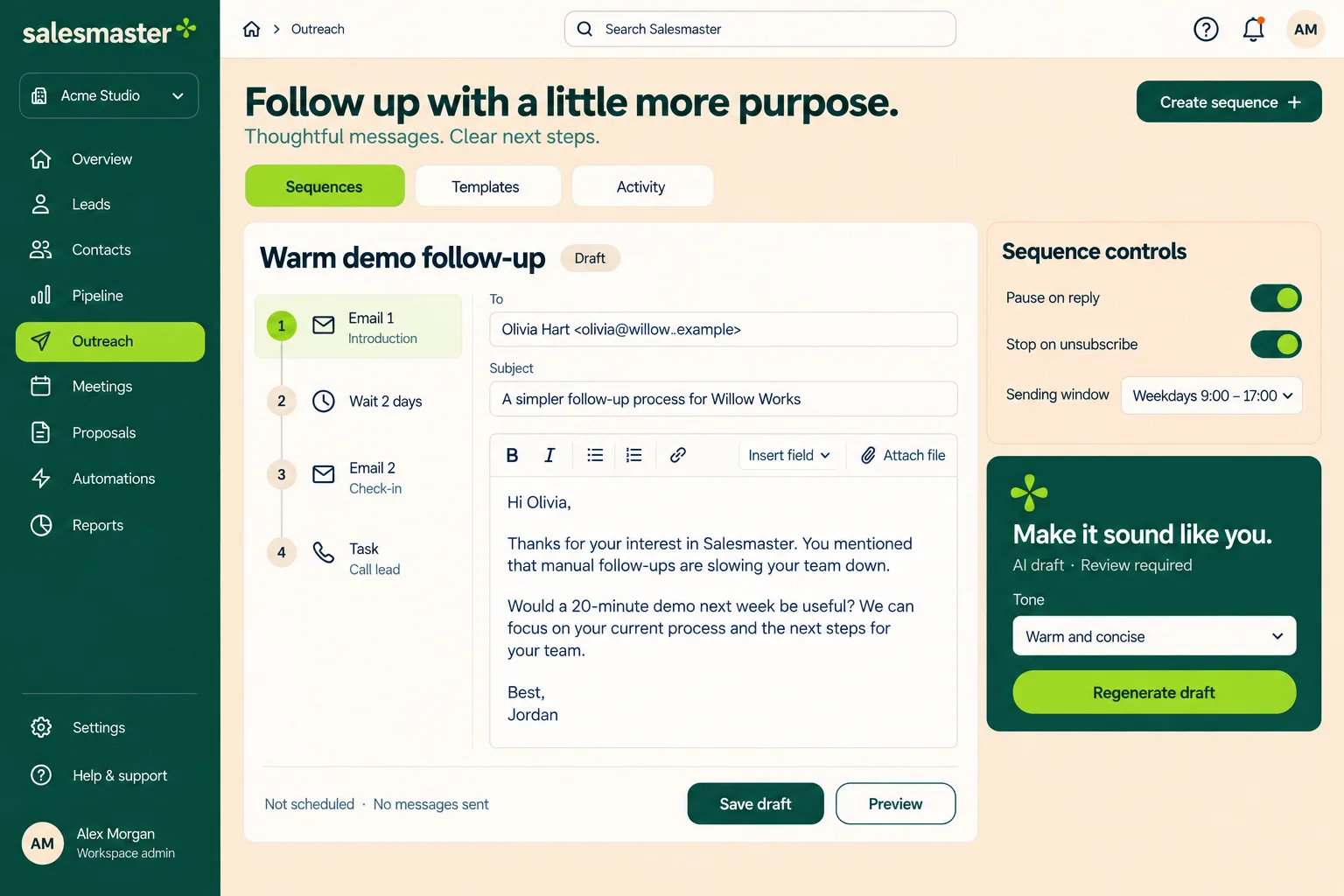
- follow-up generation
- call scripts
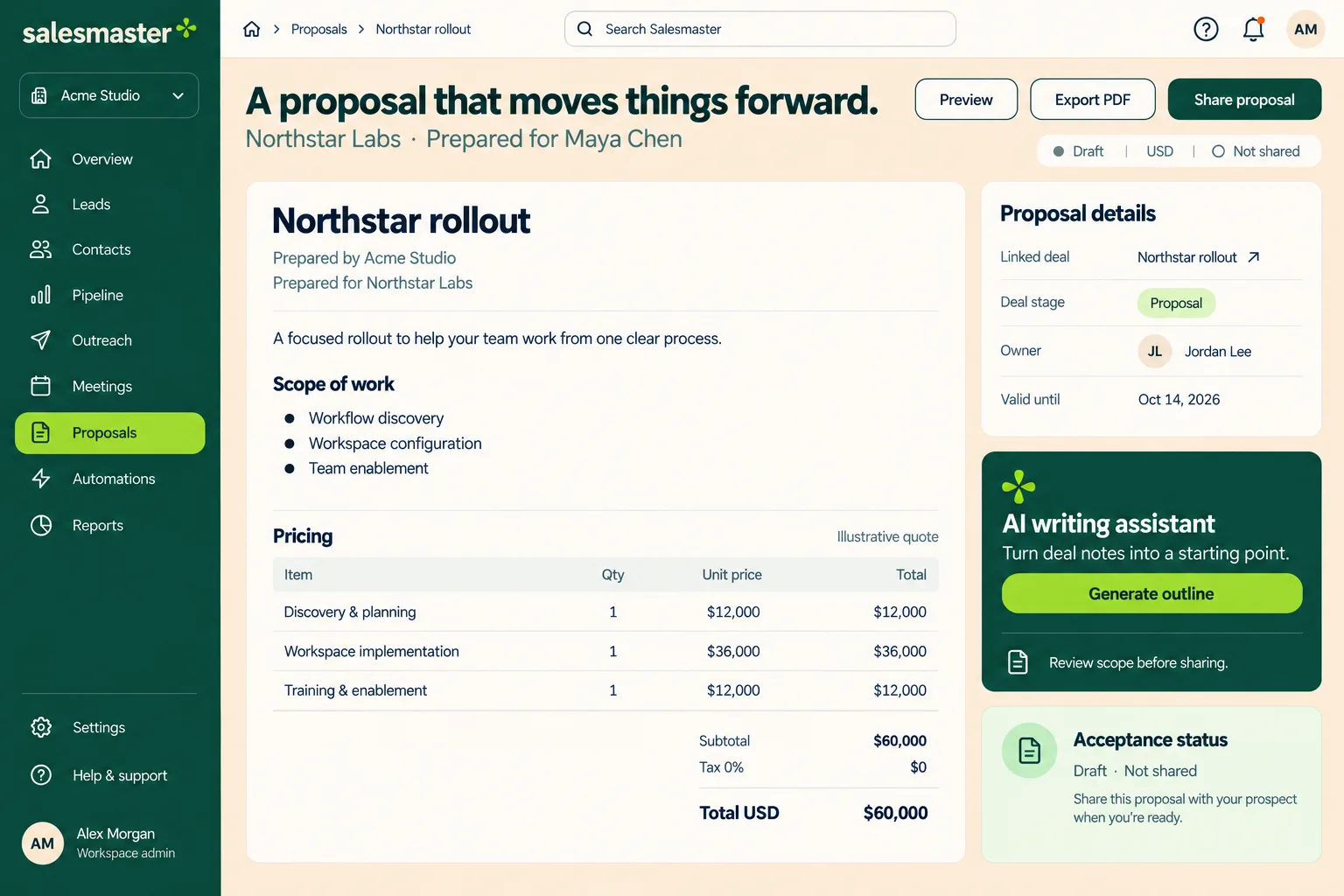
- proposal assistance
- next-best-action recommendations
- pipeline analysis
- stuck-deal detection
- deal rescue planning
- daily sales briefings
- weekly pipeline reviews
Automation without losing control
Sales automation can become dangerous when everything happens invisibly.
SalesMaster therefore separates:
Recommendations
from
Actions
and
Automations.
The system might recommend following up today.
The salesperson can approve the message.
Once a team trusts a workflow, that workflow can become automated.
Examples include:
or
or
The objective is to remove coordination work without turning sales into an uncontrollable black box.
Analytics
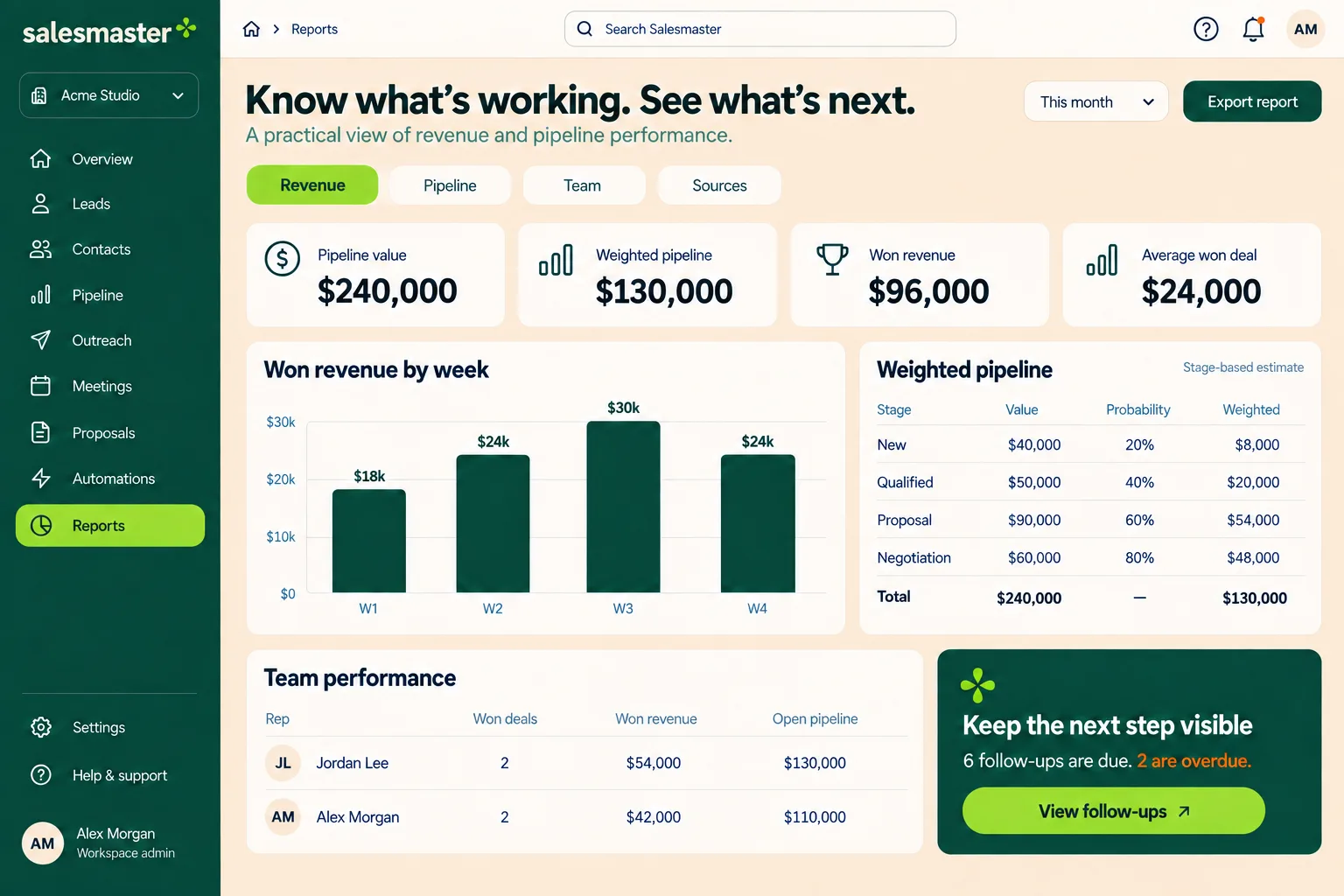
Sales reporting is also designed around questions rather than just charts.
What is moving?
What is stuck?
Where are deals being lost?
Which sources produce the strongest opportunities?
Which salesperson needs help?
What changed this week?
Which deals deserve management attention?
The goal is not simply to report the pipeline.
It is to help people understand what is happening inside it.
Architecture direction
The architecture is designed around:
TypeScript · API-driven backend · PostgreSQL · Redis · background workers · workflow engine · email integrations · calendar integrations · webhooks · AI orchestration · context retrieval · role-based permissions · audit trails
Long-running operations such as enrichment, AI analysis, scoring, sequence processing and report generation belong in asynchronous workers.
The user should not need to wait because the system is doing expensive work behind the scenes.
What this project represents
SalesMaster represents my approach to enterprise software and AI.
AI becomes useful when it is connected to real context, real workflow and real decisions.
The system does not try to replace the salesperson.
It handles the part machines are naturally good at:
Remembering everything.
So people can focus on what humans remain better at:
Understanding people, building trust and closing the deal.
Tech stack
 TypeScript
 PostgreSQL
 Redis
Redis- Background Workers
- Workflow Engine
- Email Integrations
- Webhooks
- AI Orchestration
- Context Retrieval
- Role-based Permissions
- Audit History
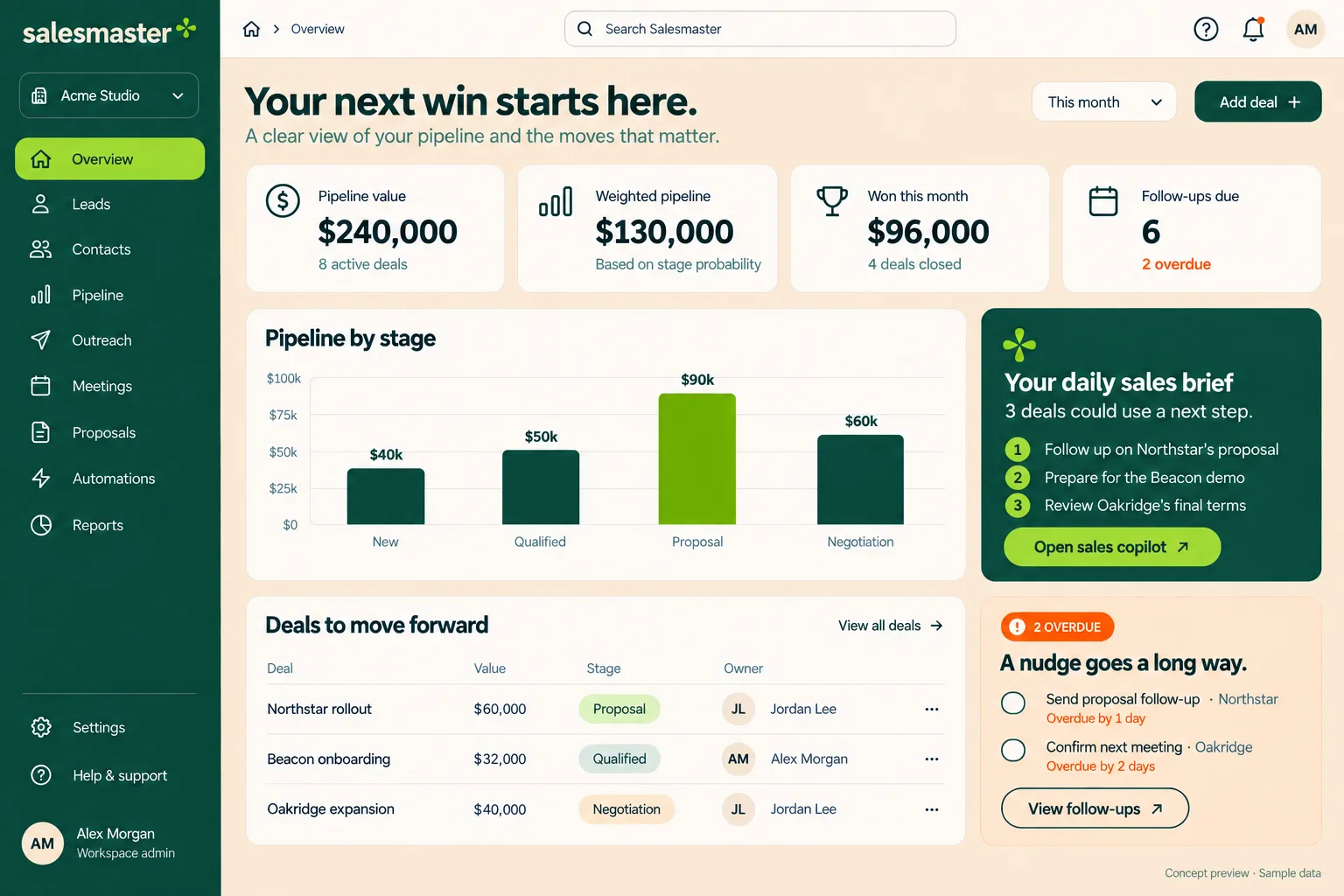
Inside the Product
Scroll sideways — or use the arrows — to walk through the product.
Product map
See how the seven systems connect.
Create → Market → Sell → Serve → Deliver → Understand — one thesis across seven products, plus the process behind all of them.