Case study / Selected work
Pikksora
Creative work without the creative bottleneck.
An AI-native visual production platform that turns prompts, products and brand context into campaign-ready creative — then lets you refine everything with natural language.
- Role
- Product Strategy · UX Architecture · AI Systems · Platform Architecture
- Timeframe
- 2025
- Status
- Active Build
- Deliverables
- Product concept, workspace UX, AI workflow design
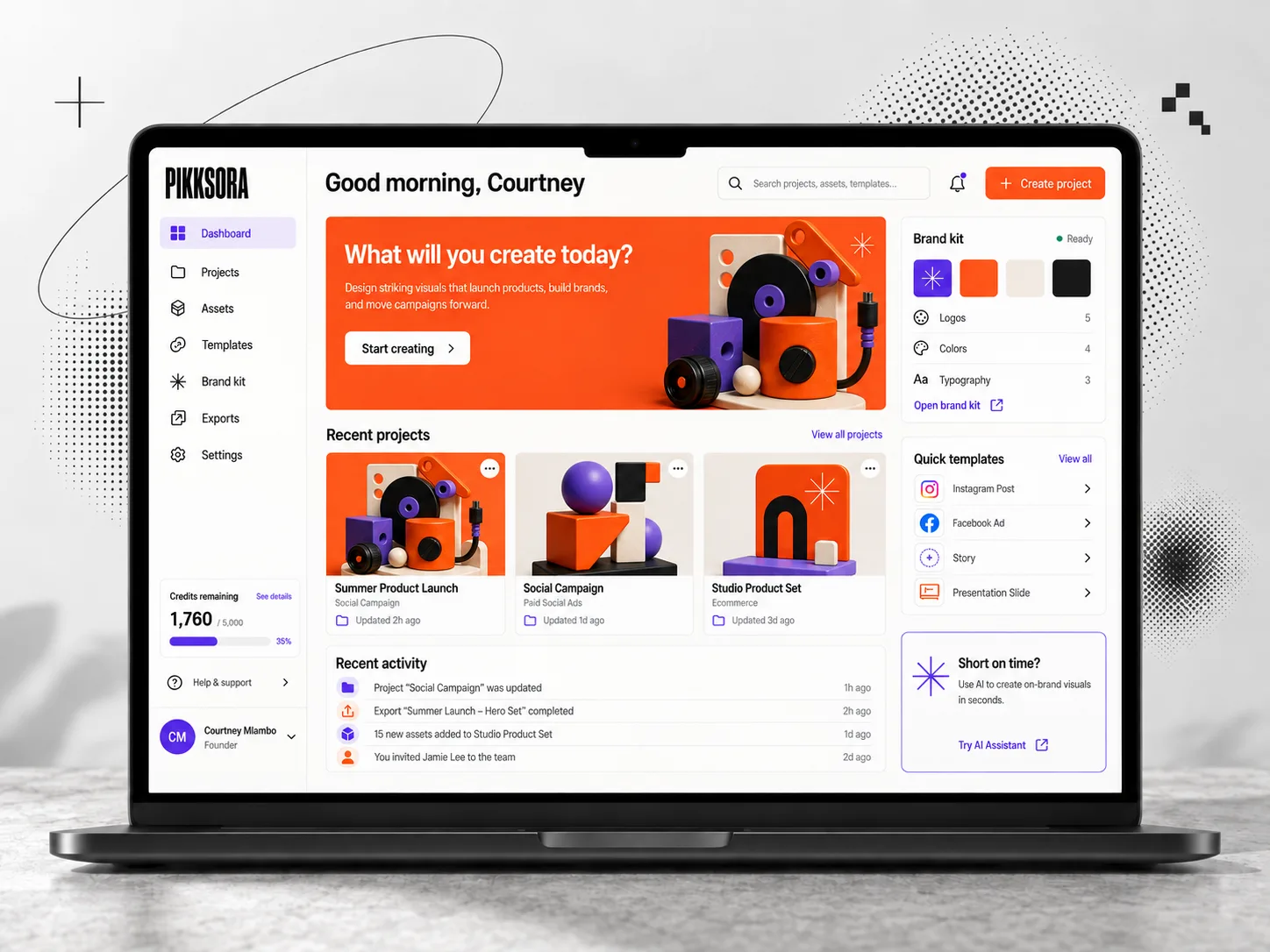
Pikksora is an AI-native creative production platform designed around a simple idea: people should start with what they want to create, not with the tools required to create it.
Traditional creative software gives users a canvas, a toolbar and hundreds of controls, then expects them to figure out the journey themselves. Pikksora reverses that model.
A user can arrive with a product photo, a rough idea, a campaign brief, a brand kit, a reference image or even a few sentences describing what they need. The platform then helps transform that context into visual directions, variations, refinements and production-ready assets.
The core workflow is deliberately simple:
The complexity exists underneath. The experience does not need to expose it.
The product thinking
One of my earliest decisions was that Pikksora should not become another Canva or Photoshop clone with AI added to the sidebar.
The product is built around AI-first workflows rather than manual design tools.
Instead of asking a user:
“Which tool would you like to use?”
Pikksora asks:
“What are you trying to create?”
That distinction changes the entire product architecture.
The primary interface becomes a creative workflow rather than a toolbox.
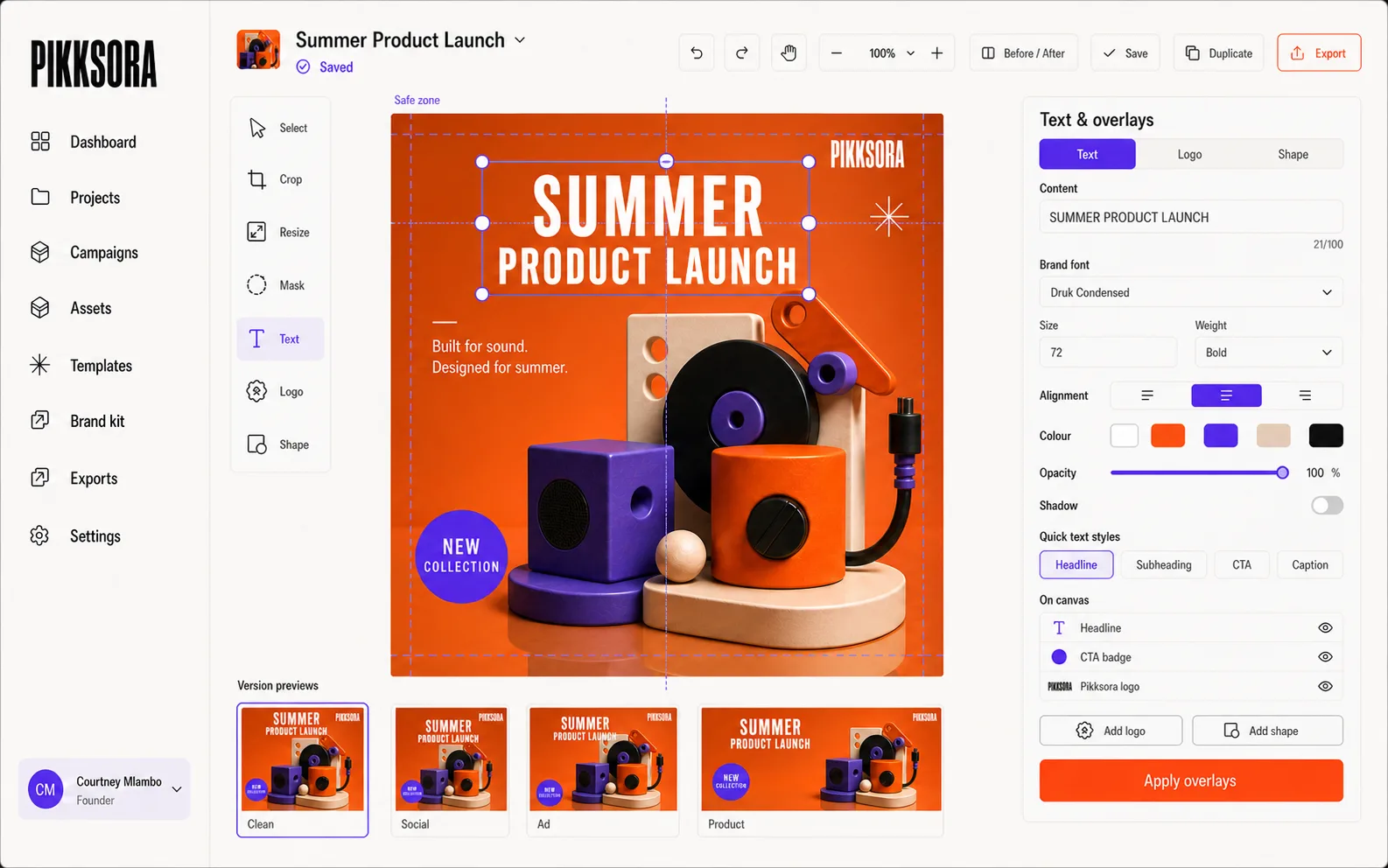
Manual editing still exists, but primarily as a finishing layer for cropping, masking, resizing, text placement, logo positioning and final adjustments. AI handles the heavy creative transformation while traditional controls provide precision where it still matters.
- A product launch.
- A fashion campaign.
- An ecommerce image set.
- A poster.
- A social campaign.
- A thumbnail.
- An infographic.
- An advertisement.
- A visual identity direction.
More than image generation
I designed Pikksora as a creative production system, not simply an image generator.
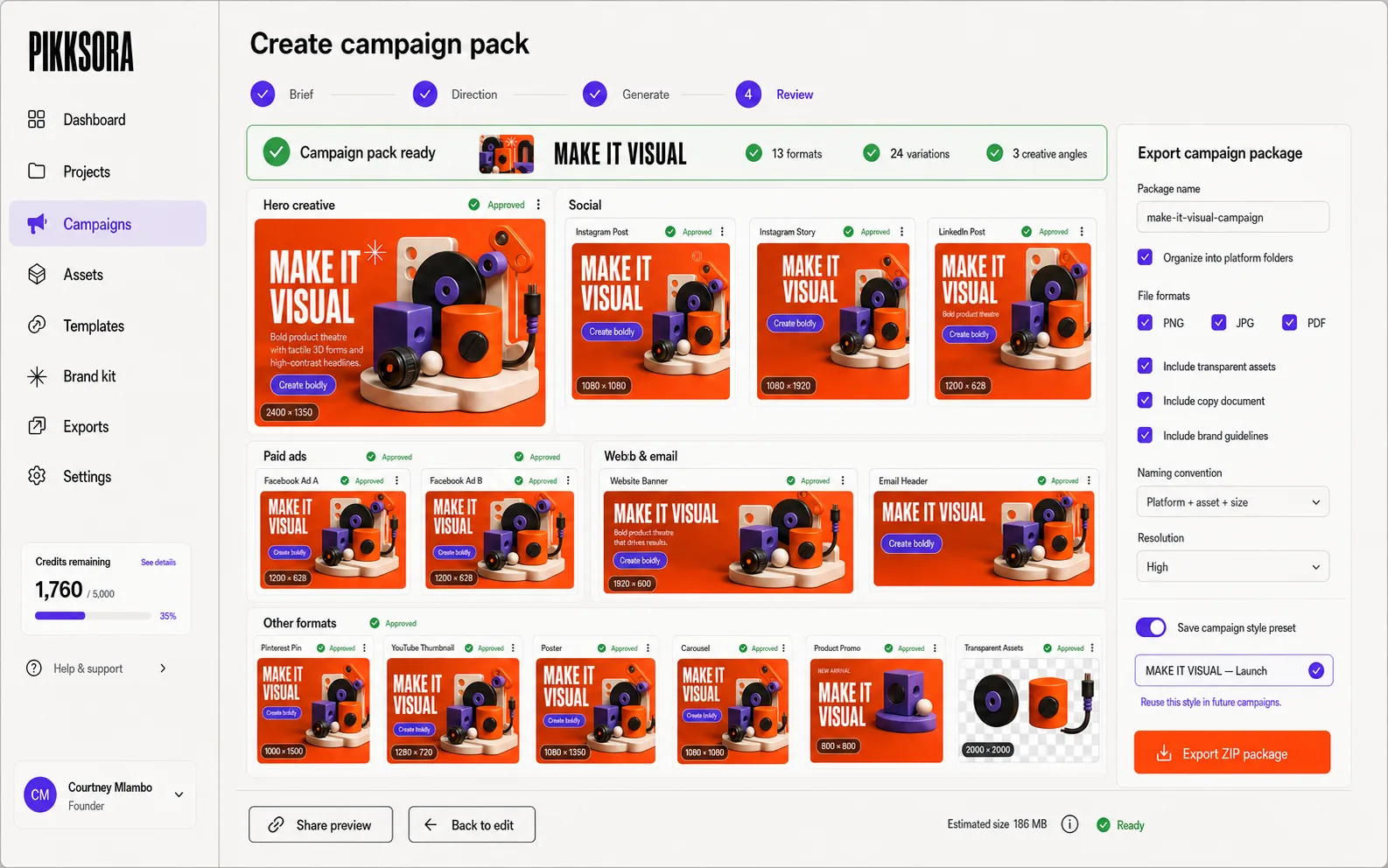
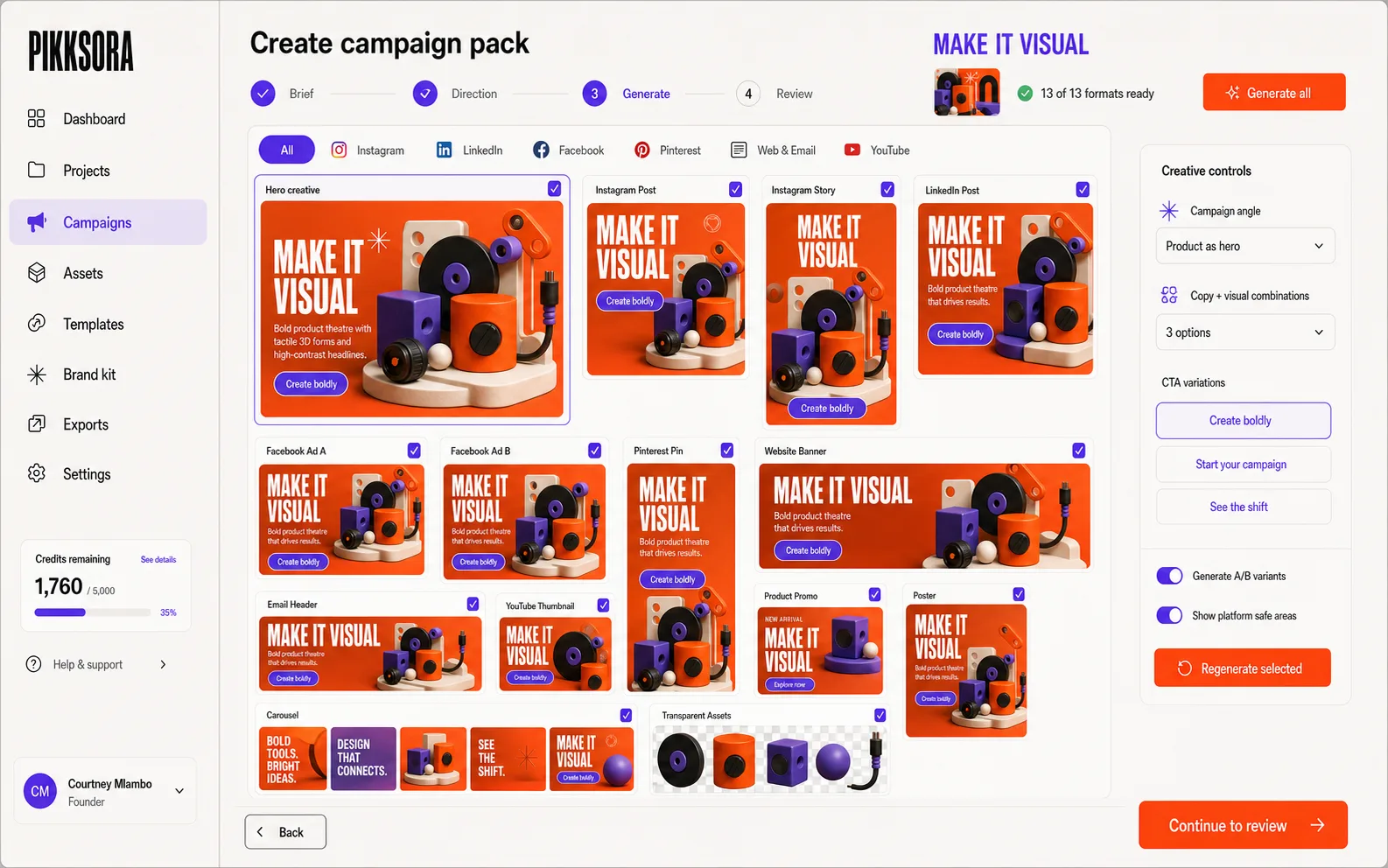
A single product photograph, for example, could become a clean ecommerce image, lifestyle scene, advertisement, Instagram post, story creative, website banner and complete launch package without repeatedly rebuilding the same concept.
That is where I see the real value of generative AI: not merely producing one impressive image, but compressing an entire creative workflow.
- text-to-image and image-to-image generation
- prompt-based image editing
- background generation and replacement
- object removal and manipulation
- inpainting and outpainting
- product photography workflows
- ecommerce image production
- social media creatives
- advertising creatives
- posters and campaign visuals
- thumbnails
- infographics
- campaign packs
- variation generation
- asset libraries
- reusable AI recipes
- collaboration and approvals
- multi-format exports
- generation history
- AI credit and usage systems
Brand intelligence
Brand consistency is another major part of the product.
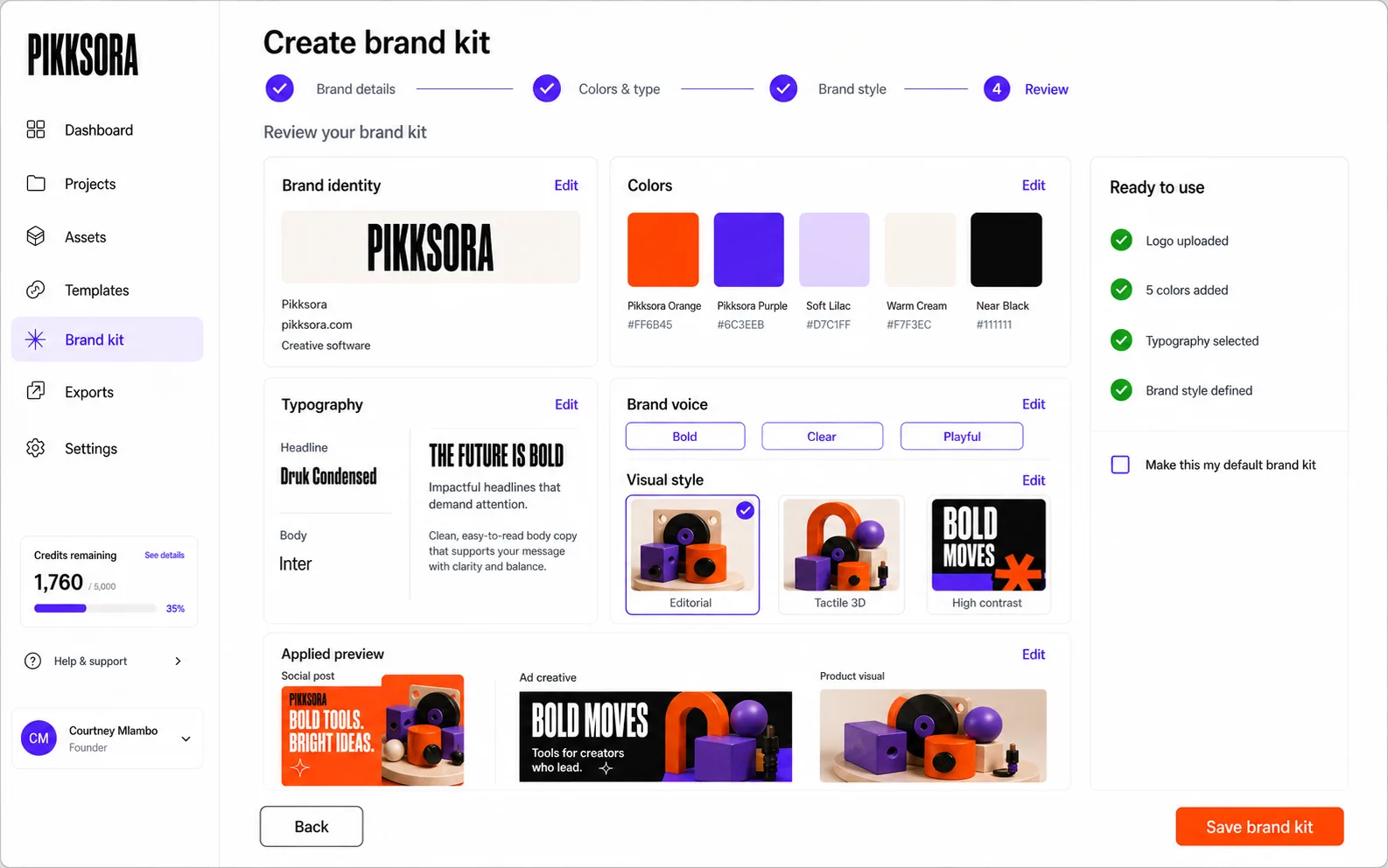
Instead of treating the brand kit as something users apply after generation, I designed it as part of the generation context itself.
The long-term idea is that the product should gradually understand what a brand considers “right.”
The goal is no longer simply:
Generate a beautiful image.
It becomes:
Generate something this specific brand would actually publish.
- brand colours
- typography
- visual direction
- logo rules
- preferred compositions
- approved previous outputs
- rejected outputs
- campaign history
- avoided styles
- preferred photography
- reusable brand recipes
Non-destructive AI workflows
AI generation also introduces a different version-control problem from conventional design software.
Every result matters.
Every prompt matters.
Every refinement may branch into another direction.
For that reason, I designed every generated output as a versioned asset rather than a disposable response.
Original files should never be overwritten.
The system should remember:
Users can therefore experiment aggressively without losing previous work.
Successful generations can later become templates, brand recipes or reusable campaign directions.
This transforms AI generation from trial-and-error into a repeatable production system.
Architecture direction
The planned architecture centres around:
TypeScript · NestJS · PostgreSQL · REST APIs · Object Storage · Redis · Background Workers · Queues · AI Provider Abstraction · Credit Metering · Versioned Asset Storage
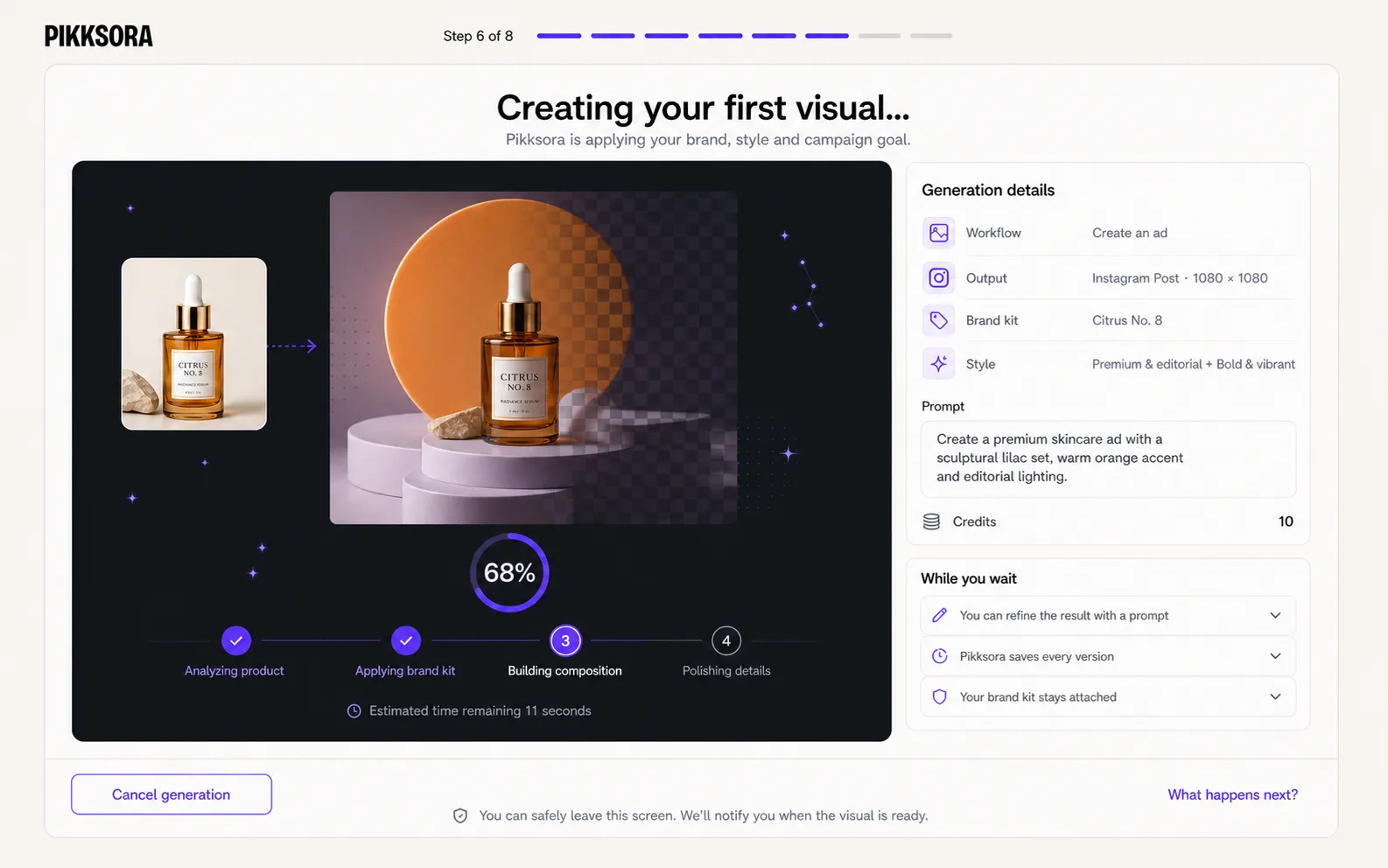
AI generation is treated as asynchronous infrastructure.
A request can move through states such as:
rather than making long-running model requests part of normal application requests.
The AI provider layer is also deliberately abstracted.
Different models can be used for different strengths — generation, editing, illustration, product photography, background manipulation or specialised workflows — without forcing the product itself to depend permanently on one provider.
For performance-sensitive image and canvas operations, the architecture leaves room for a Rust-based processing core where lower-level optimisation becomes valuable.
The UX principle
Pikksora is designed around progressive disclosure.
Users should not see fifty controls simply because fifty controls exist.
The product should surface the next decision that matters.
Choose what you want.
Give the system context.
Generate directions.
Choose one.
Refine it.
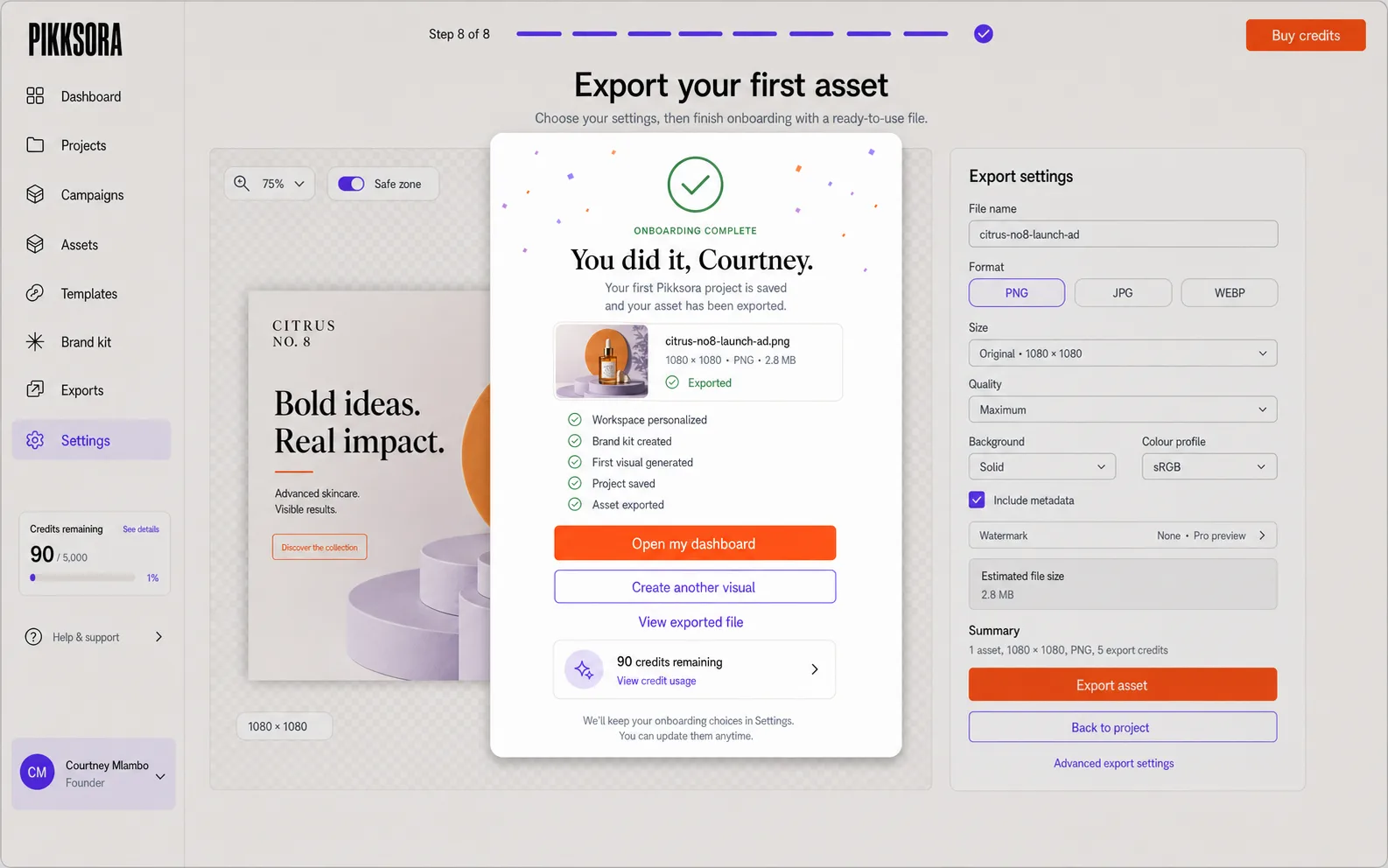
Export it.
Power remains available underneath, but complexity appears only when the user asks for it.
What this project represents
Pikksora represents the way I think about AI products.
I am less interested in putting a chatbot inside existing software and more interested in asking:
If intelligence were available from the beginning, how would we redesign the workflow itself?
Pikksora is my exploration of that question.
The canvas is not the product. The intelligence around it is.
Tech stack
 TypeScript
 NestJS
 PostgreSQL
- REST APIs
- Object Storage
 Redis
Redis- Background Workers
- Queues
- AI Provider Abstraction
- Credit Metering
- Versioned Asset Storage
- Rust core
Inside the Product
Scroll sideways — or use the arrows — to walk through the product.
Product map
See how the seven systems connect.
Create → Market → Sell → Serve → Deliver → Understand — one thesis across seven products, plus the process behind all of them.