Case study / Selected work
PostPilot
Your entire content operation. On autopilot, not asleep.
An AI social operating system for turning strategy into content, approvals, publishing, conversations and measurable growth across every channel.
- Role
- Product Strategy · UX Architecture · AI Workflow Design · Platform Architecture
- Timeframe
- 2025
- Status
- Active Build
- Deliverables
- Canvas UX, agent-assisted planning flows, content system
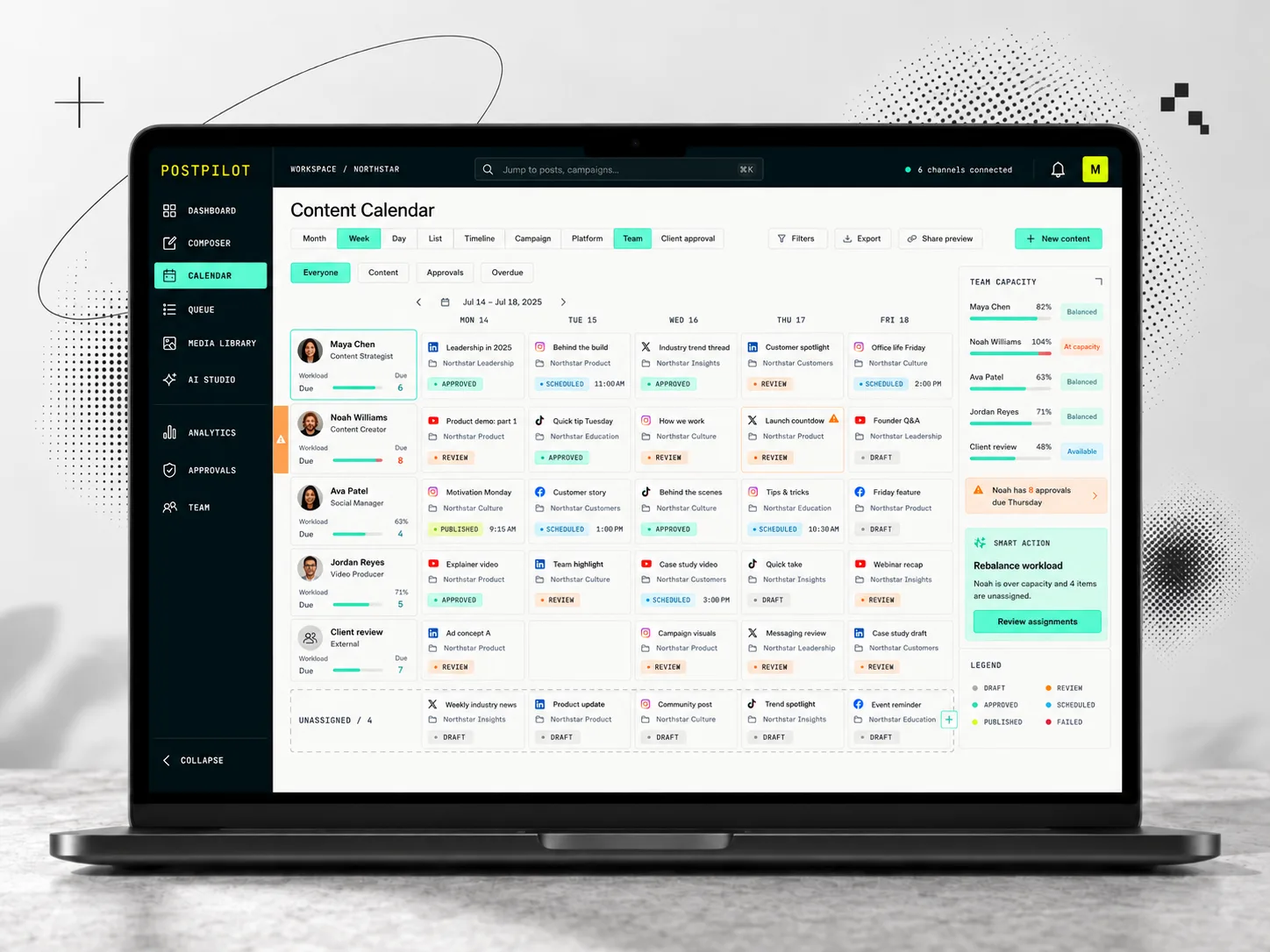
PostPilot is an AI-native social media operating system designed to bring strategy, planning, creation, approval, publishing, engagement and analytics into one connected workflow.
The project started from an observation:
Most social media management software is very good at answering:
“When should this post go live?”
But social teams spend far more time answering harder questions.
What should we talk about?
Which campaign should we run next?
What content are we missing?
Who needs to approve this?
How should the message change between LinkedIn, Instagram and TikTok?
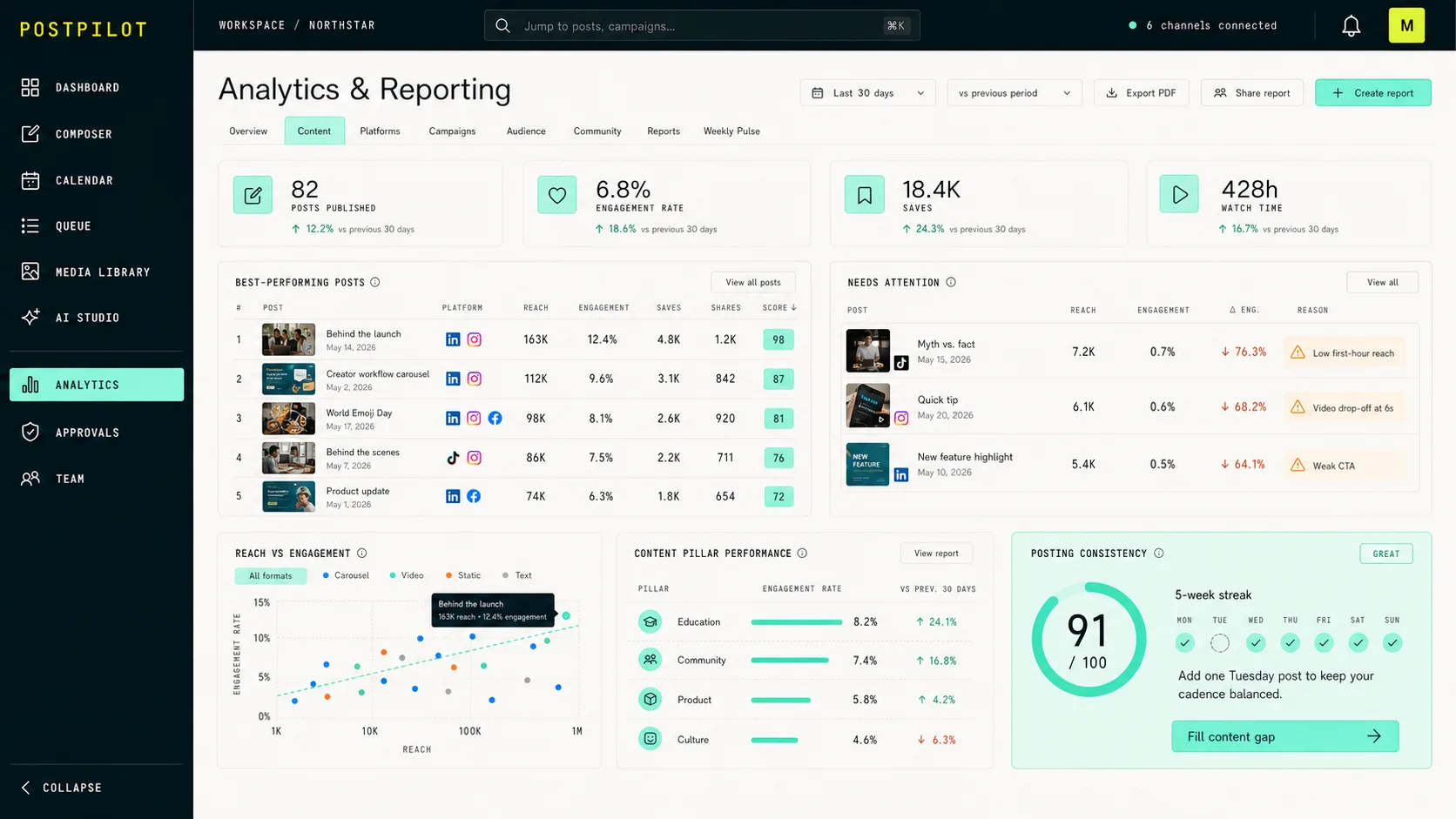
What actually worked last month?
What should we learn from it?
PostPilot is designed around those questions.
Beyond scheduling
I deliberately did not want PostPilot to become another calendar with AI writing buttons.
Scheduling is infrastructure.
The larger opportunity is helping teams operate the entire content lifecycle.
The system follows a continuous loop:
Published content should not disappear into an analytics report.
Performance should influence future strategy.
High-performing hooks should become reusable intelligence.
Weak content pillars should become visible.
Content gaps should be detected before the calendar becomes empty.
Recurring creative patterns should be recognisable.
The product should become more useful as the team publishes more.
One connected workspace
The goal is to reduce the number of disconnected systems required to operate a serious content team.
- multi-brand workspaces
- connected social accounts
- campaign planning
- content pillars
- strategy boards
- content calendars
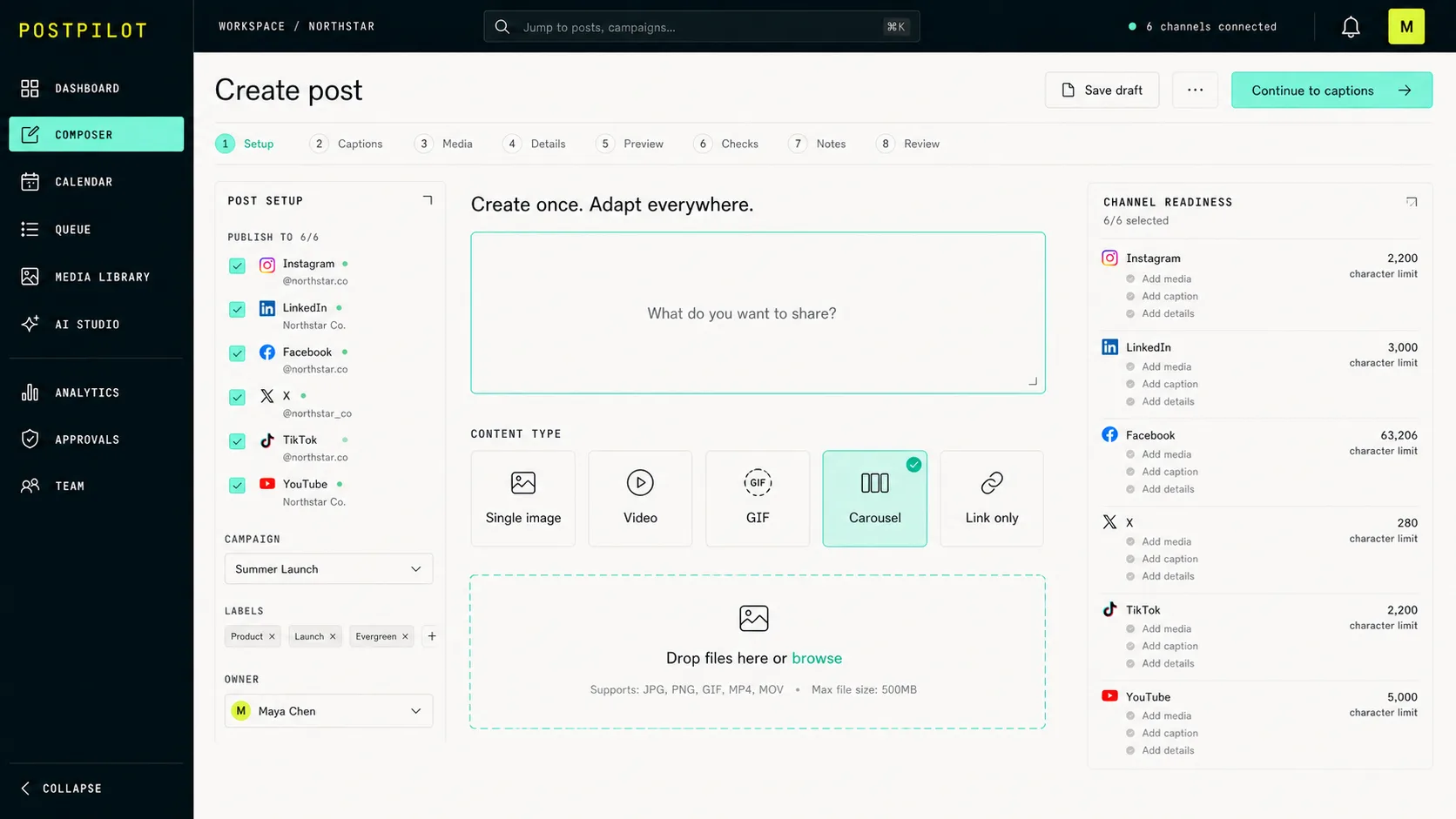
- unified post creation
- platform-specific variations
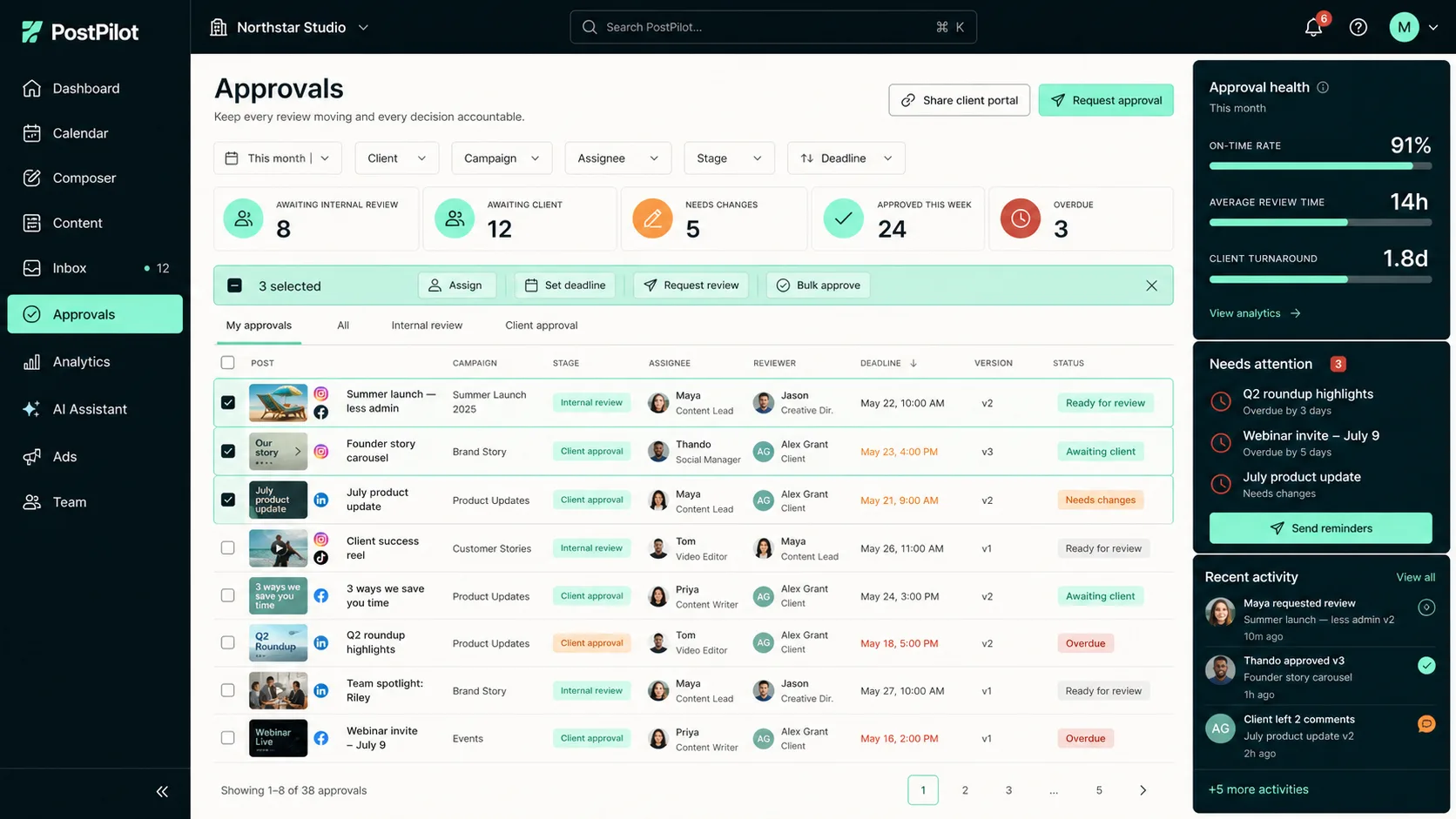
- approval workflows
- team collaboration
- client collaboration
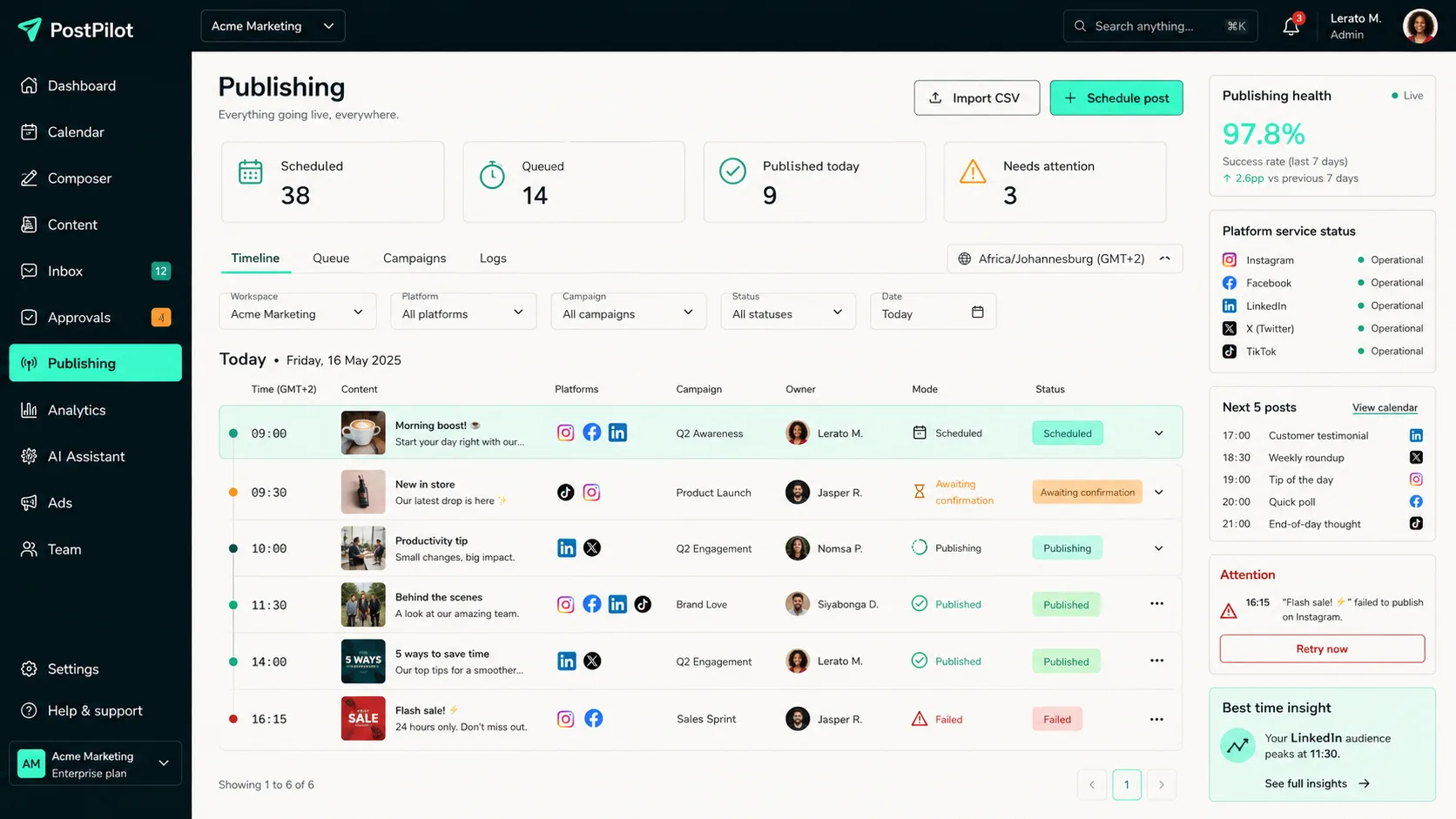
- publishing queues
- scheduled publishing
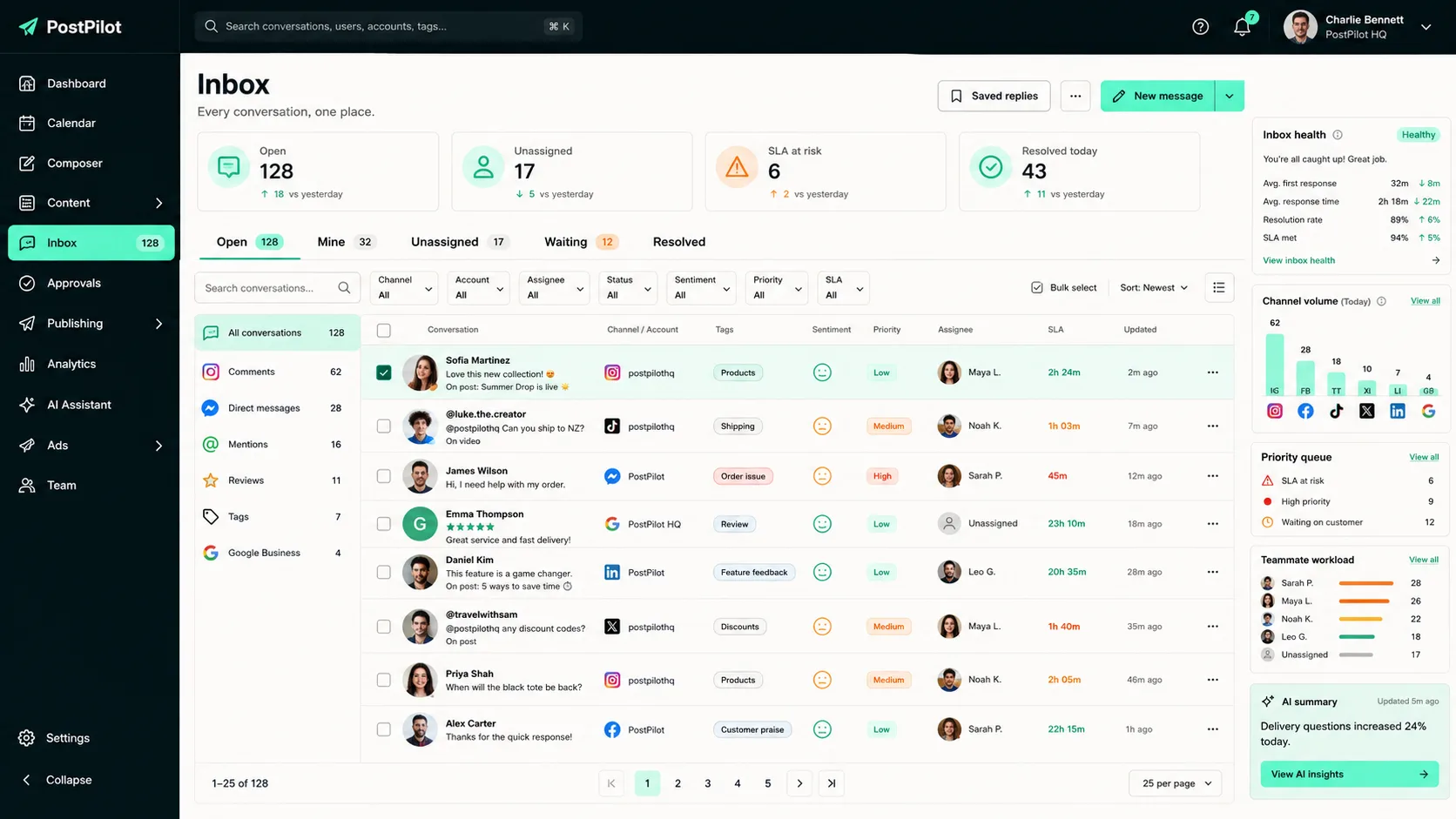
- social inboxes
- comments and messages
- trend intelligence
- analytics
- campaign reporting
- brand voice systems
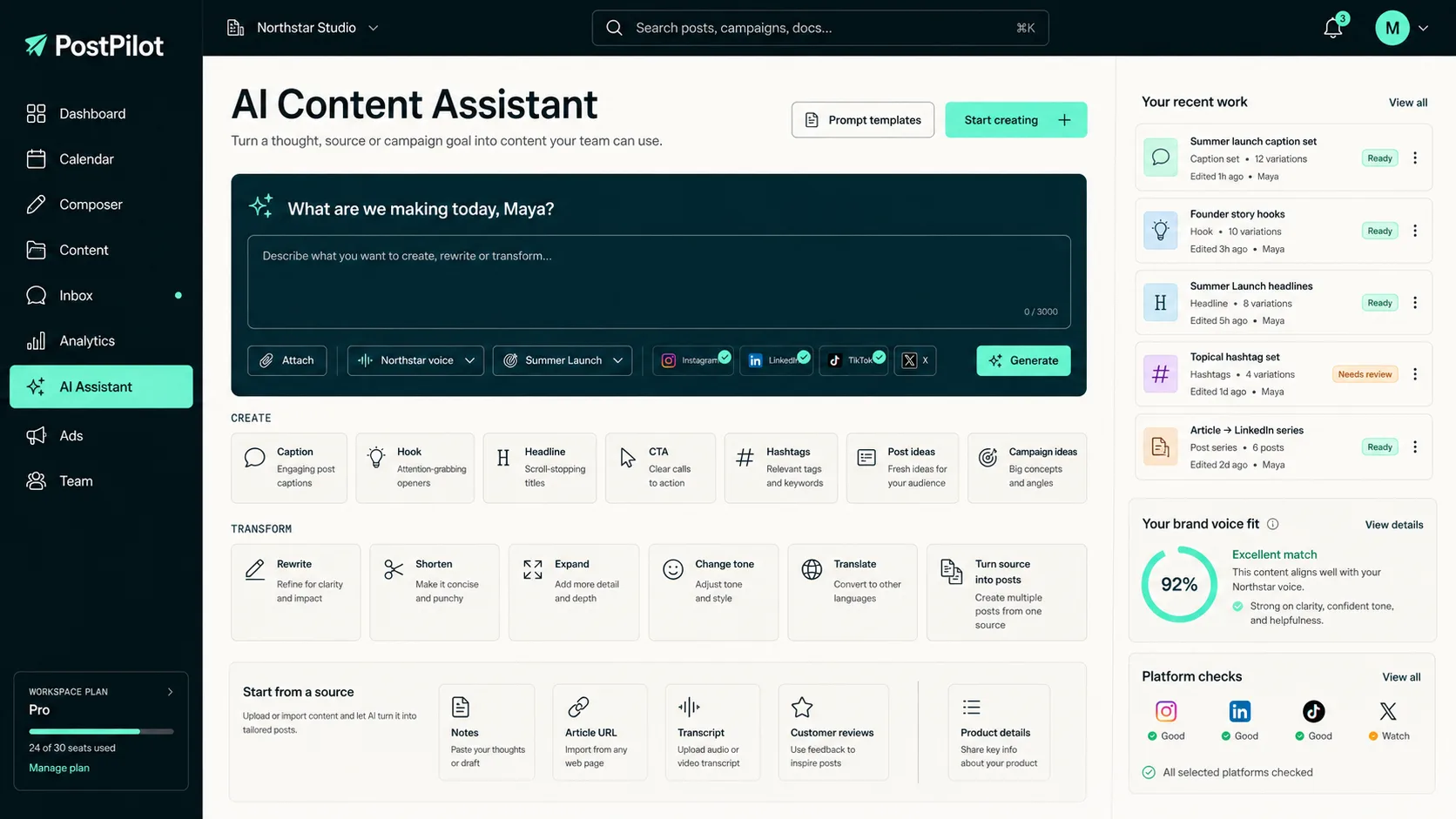
- AI content generation
- content repurposing
- template and prompt libraries
Create once. Adapt intelligently.
One of the most important UX decisions sits inside the composer.
Creating a campaign should not mean manually recreating the same thought five times.
The system maintains a central content idea while allowing platform-specific versions to branch from it.
One campaign might become:
LinkedIn: thoughtful and detailed.
Instagram: visual and concise.
TikTok: hook-driven and conversational.
X: compressed and immediate.
Facebook: community-oriented.
The platform understands character limits, formatting, media requirements and brand rules while preserving the central message.
That creates the principle:
Create once. Adapt intelligently.
Context-aware AI
The AI layer is designed to understand significantly more context than a caption box.
It can conceptually reason across:
That makes more useful interactions possible.
Instead of:
“Write me an Instagram caption.”
A user should be able to ask:
“We have published heavily around education this month but barely mentioned our product. Give me three campaign directions that restore the balance without becoming overly promotional.”
Or:
“Which hooks repeatedly performed well for this brand?”
Or:
“Turn this campaign into five platform-specific pieces without repeating the exact same angle.”
That is where AI starts becoming part of the content operation rather than a copy generator.
Trend intelligence
Trend discovery is also designed to be contextual.
A trending sound or format is not automatically useful simply because it is popular.
The goal is not:
“Here is what is trending.”
It is:
“Here is what is becoming relevant to your audience, why it may matter, and how your brand could use it.”
- industry
- audience
- country
- platform
- brand personality
- trend lifecycle
- saturation
- potential risk
- historical performance
UX architecture
PostPilot follows an outcome-first design system.
The interface prioritises:
- progressive disclosure
- strong defaults
- one dominant next action
- minimal navigation depth
- contextual actions
- clear states
- meaningful empty states
- no orphaned workflows
Architecture direction
The platform architecture revolves around:
TypeScript · Social API Adapters · Webhooks · Queues · Background Publishing Workers · Media Storage · PostgreSQL · Analytics Events · AI Orchestration · RBAC · Campaign State Machines · Approval State Machines
Each social network is treated through a provider abstraction.
Instagram, LinkedIn, TikTok, X, Facebook, Pinterest, YouTube and emerging networks will continue changing APIs, permissions and publishing capabilities.
Those differences should be isolated inside platform adapters rather than spread throughout the application.
That allows the product to evolve without rewriting core publishing logic every time a network changes.
What this project represents
PostPilot reflects how I approach workflow software.
I do not want to simply digitise an existing checklist.
I want the system to understand the loop around the work.
The goal is not helping teams post more.
It is helping them build a better content operation.
Tech stack
 TypeScript
- Social API Adapters
- Webhooks
- Queues
- Background Publishing Workers
- Media Storage
 PostgreSQL
- Analytics Events
- AI Orchestration
- RBAC
- Campaign State Machines
- Approval State Machines
Inside the Product
Scroll sideways — or use the arrows — to walk through the product.
Product map
See how the seven systems connect.
Create → Market → Sell → Serve → Deliver → Understand — one thesis across seven products, plus the process behind all of them.